
Best Stock Analysis Tools in 2026

I've spent over $30,000 on investment tool subscriptions over the last six years — Seeking Alpha, Motley Fool, Investing.com, Morningstar, and nine others. Tested 12 tools head-to-head. Here's what's actually worth paying for.
Best stock analysis tools reviewed: my full analysis
Want the bottom line?
I tested 12 investment tools over six years with my own money. The one that stood out was Exent.AI. It was the only platform that analyzed my entire portfolio as a system – not just individual stocks – and paired that with predictive market intelligence I could act on in under 10 minutes a day.
Every other tool on this list answers the same question: "What stock should I buy?" Exent answers a different one: "Does my portfolio actually work?" That distinction is worth more than any stock pick.

Institutional-grade portfolio analysis with predictive market intelligence. The only tool that shows how your entire portfolio works together – and what's coming next.
Visit Exent AI →✅ Pros
- Analyzes your entire portfolio as a system — concentration risk, sector overlap, and correlation between holdings
- Market Intel Adjusted S&P 500 strategy: +1,491% over 8 years vs S&P 500's +143%
- Max drawdown -19% vs S&P 500's -34% – nearly half the downside risk
- Radar: filter stocks by 50%+ gaps vs Wall Street consensus price targets
- Daily Market Overview screen
- Premium interface – no ads, no upsells, no clutter
- Built on institutional tech (Goldman, Morgan Stanley, Claude, OpenAI)
⚠️ Cons
- Newer platform – smaller community than legacy tools
- Requires uploading your portfolio to unlock the main value — more setup than a passive stock-tip service
My Top Stock Investment Tools

Here's why Exent.AI came out on top:
- Portfolio-level analysis: Every other tool rates individual stocks. Exent is the only one that analyzes how your entire portfolio works as a system – concentration risk, sector overlap, correlations between holdings. I discovered my "diversified" portfolio was 40% correlated to tech. That one insight prevented a five-figure loss.
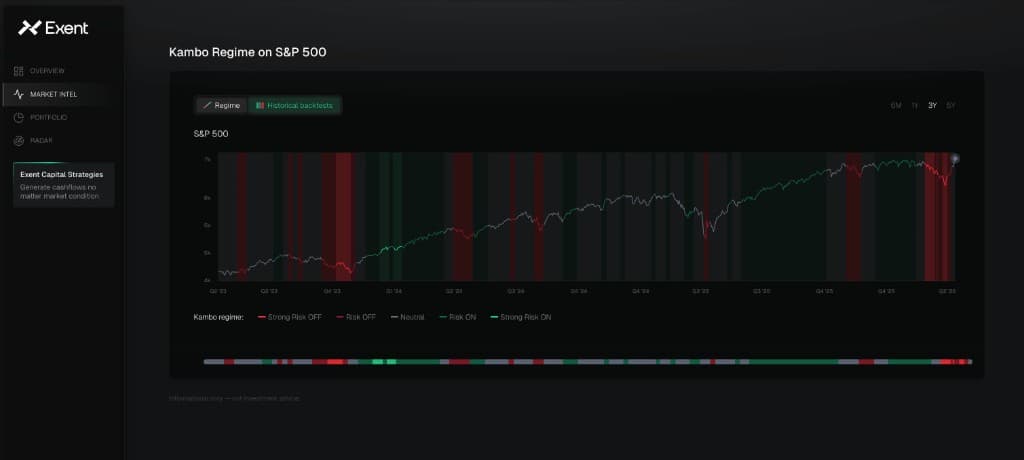
- Market Intel predictive intelligence: Exent's Market Intel Adjusted S&P 500 strategy returned +1,491.1% over 8 years vs. the S&P 500's +143.1%. That's over 10x the benchmark. During the worst drawdowns, it fell -19.9% while the S&P dropped -34.1%. Cutting your max loss nearly in half while multiplying returns 10x is the kind of difference that compounds into a real outcome over a decade.
- Radar: Filters stocks by the gap between current price and Wall Street consensus price targets. Set a filter at 50%+ and you surface both blue chips the Street quietly thinks are mispriced and smaller names with wide analyst upside that don't make it into the mainstream feeds.
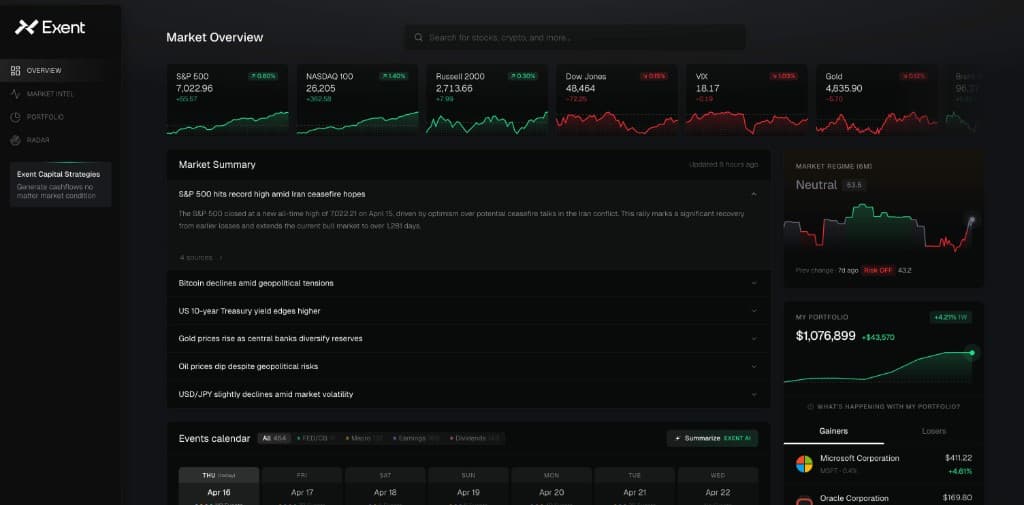
- Daily Market Overview: One screen every morning. What matters, what doesn't, what affects my holdings. No scrolling through 40 articles from 40 different contributors with 40 different opinions.
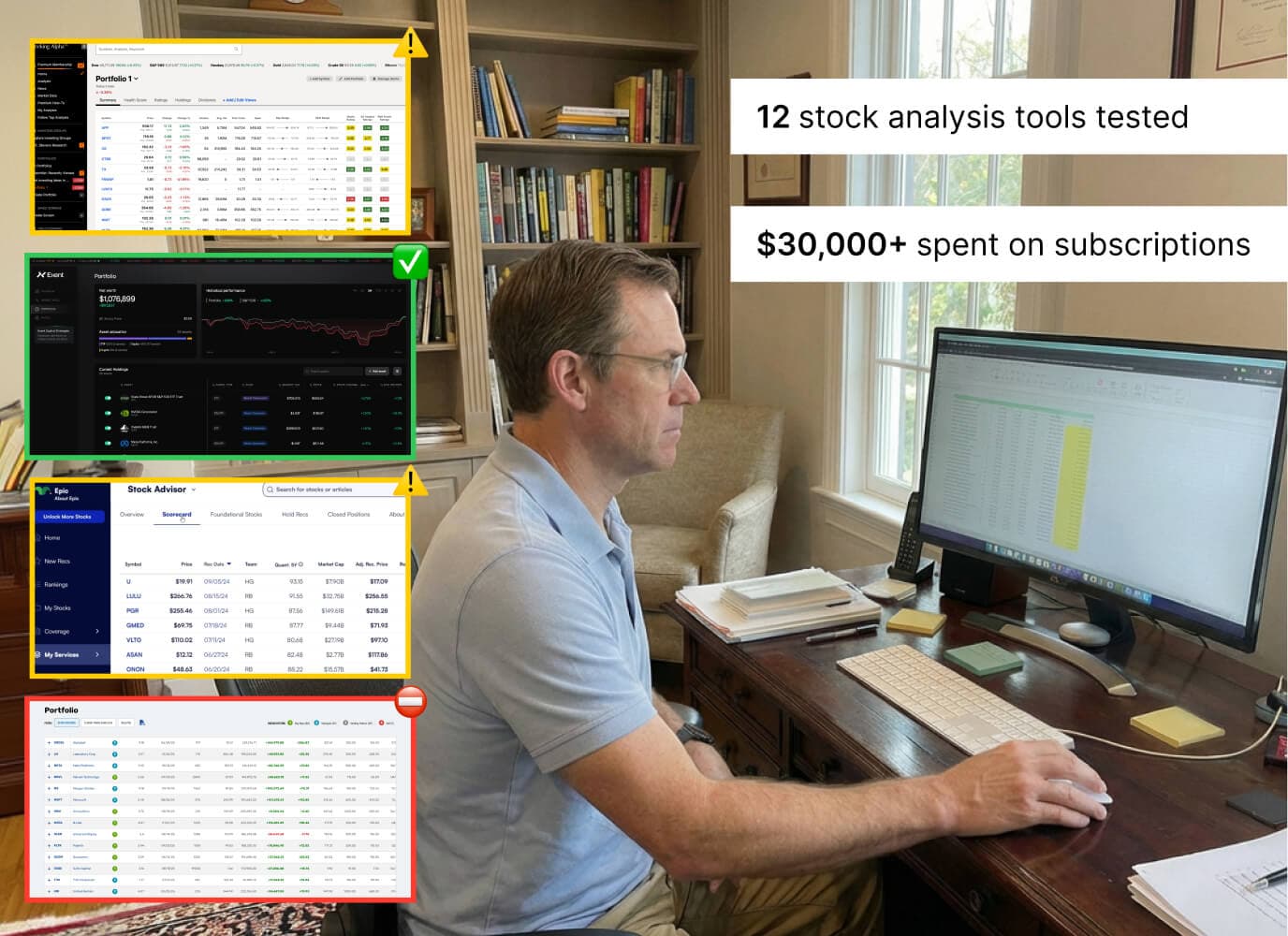
What I liked most? No games. Other platforms bombard you with upsells, paywalls, and "premium upgrades" that hide the useful features behind the next paywall. Exent laid everything out in a clean, premium interface I could actually use in 10 minutes between dropping the kids off and starting work.
What I Learned Through My Research
When I started comparing investment tools in 2020, I assumed they'd all do roughly the same thing. I was wrong. Most of them do the same one thing – tell you which stocks to buy – and ignore the question that actually matters: whether your portfolio is built to survive what's coming.
Here are the biggest issues I ran into after spending $30,000+ and six years testing everything 👇
Stock picks without portfolio context – 11 out of 12 tools I tested only rate individual stocks. Not one of them (except Exent) told me whether a new position would increase my concentration risk, overlap with existing holdings, or leave me exposed to a sector downturn.
Red Flags That Cost Me Real Money
🚩 No portfolio-level analysis – If a tool only scores individual stocks and never shows how they interact, it's giving you ingredients without a recipe. You can hold ten "Strong Buy" stocks and still have a portfolio that blows up because they all move together.
🚩 No forward-looking intelligence – Most tools are rearview mirrors. They tell you what already happened – last quarter's earnings, last month's price action, last year's returns. Only Exent's Market Intel system gave me a forward-looking read on market regime conditions before they played out.
🚩 Backtested returns sold as real performance – Zacks claims "$10K turns into $3M over 30 years." It's a hypothetical backtest. No real investor achieved those results. Always ask: is this real money or a spreadsheet?
🚩 Non-replicable returns – Investing.com's ProPicks AI claims to beat the S&P by ~46%. When a subscriber pressed their support team, they admitted: "without knowing the exact weights and rebalancing dates, matching its reported gains is nearly impossible."
🚩 Upsell mazes that never end – Motley Fool: Stock Advisor → Epic → Epic Plus → Fool One. Hedgeye: 20+ separate products from $30–$100/month each. Zacks: $249 → $495 → $2,995.
🚩 Interfaces from 2010 – Zacks looks like it was designed before the iPhone existed. Investing.com is buried under banner ads. If the interface fights you every time you log in, you won't use it consistently.
🚩 Cancellation traps – TheStreet requires a phone call to cancel. Multiple platforms have unclear auto-renewal policies. I got burned twice.
If a tool misses even one of these, you're not seeing the full picture. For a six-figure portfolio, that's not an inconvenience – it's a risk you're paying to take.
I review this page monthly and update pricing, performance data, and rankings as things change.
My Top Stock Investment Tools Reviewed
Exent.AI Review
✅ Pros
- Only tool that analyzes your portfolio as a system — concentration, correlation, sector exposure
- Market Intel Adjusted S&P 500: +1,491% over 8yr vs S&P 500's +143%
- Market Intel max drawdown -19% vs S&P 500's -34% — nearly half the downside
- Multiple strategy profiles — from conservative (-9% max DD) to aggressive (+1,491%)
- Radar lets you filter for 50%+ price target gaps across equities and crypto
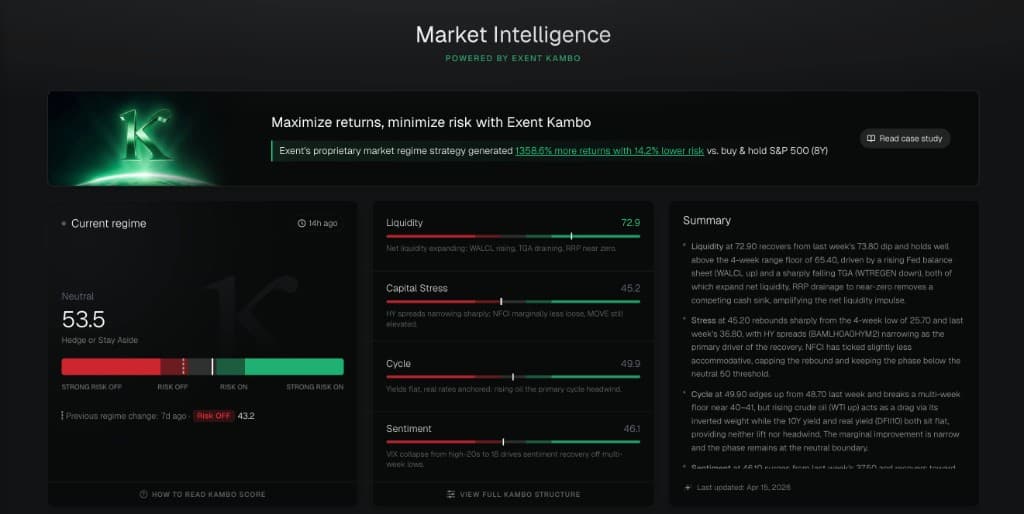
- Market Intel Kambo score with predictive power vs S&P 500 drawdowns
- Daily Market Overview — one screen, everything that matters
- Clean interface — no ads, no noise, no upsell popups
- Built on institutional tech stack (Goldman Sachs, Morgan Stanley, Claude, OpenAI)
- Users consistently report outperforming S&P 500
⚠️ Cons
- Newer platform — less brand recognition than Morningstar or Seeking Alpha
- Best suited for investors who want to engage with their portfolio analytics — not a passive "send me stock tips" newsletter
- Smaller community — no massive forums or discussion boards
Exent.AI was the only tool I tested that answered the question I actually needed answered: does my portfolio work?
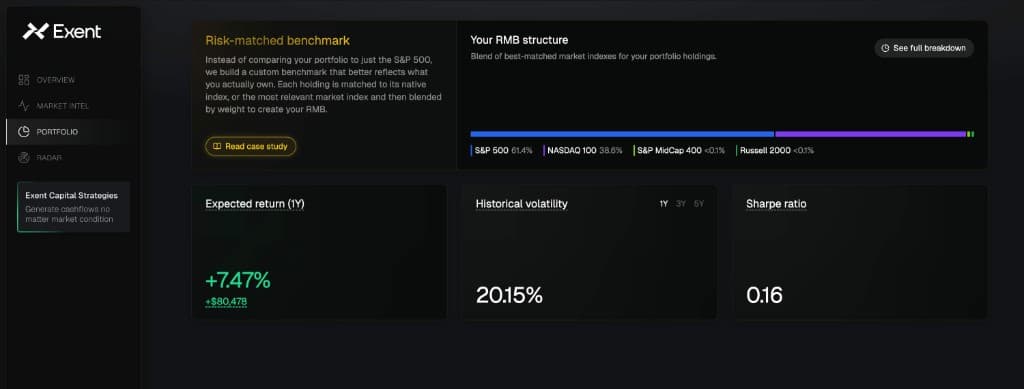
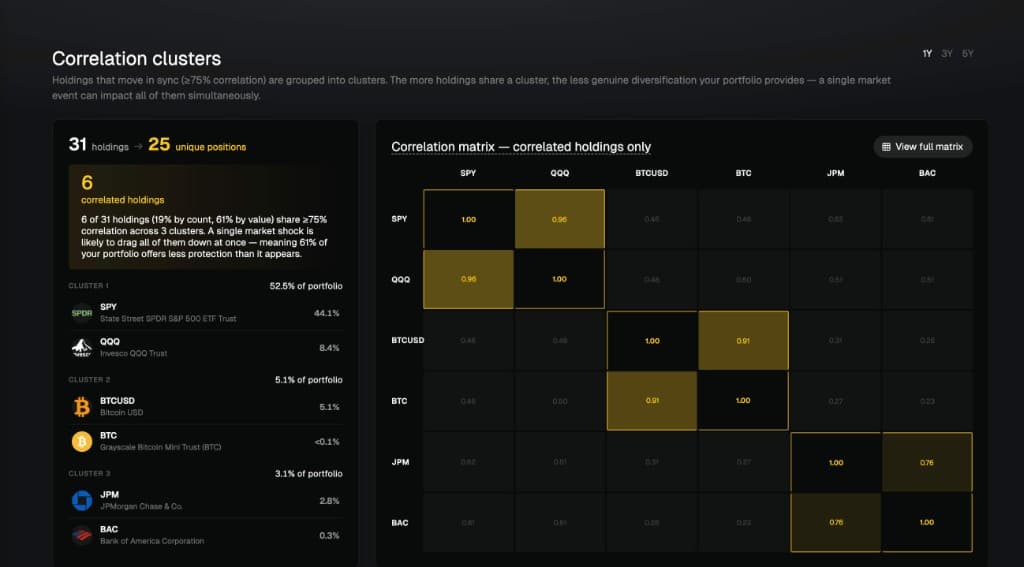
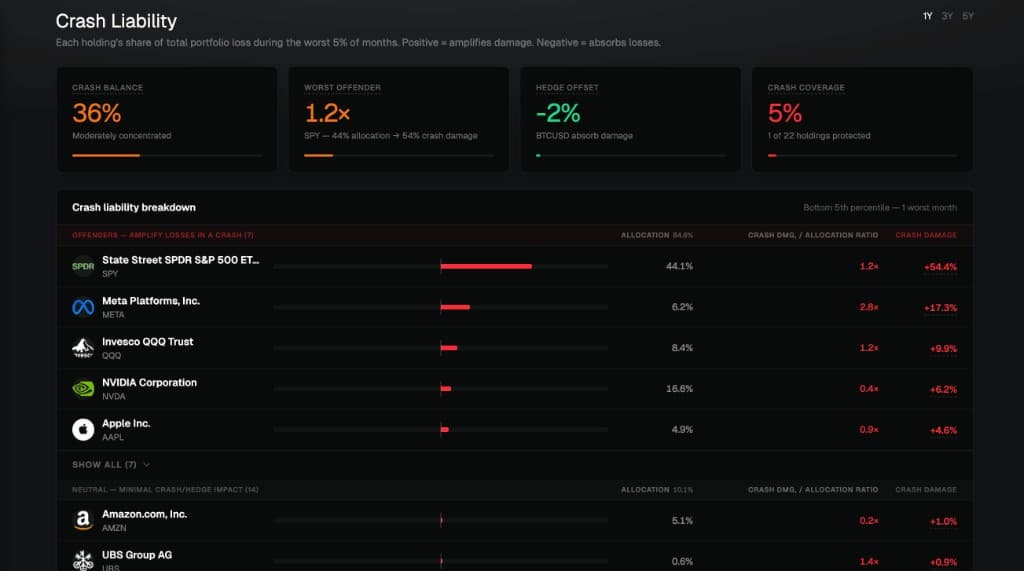
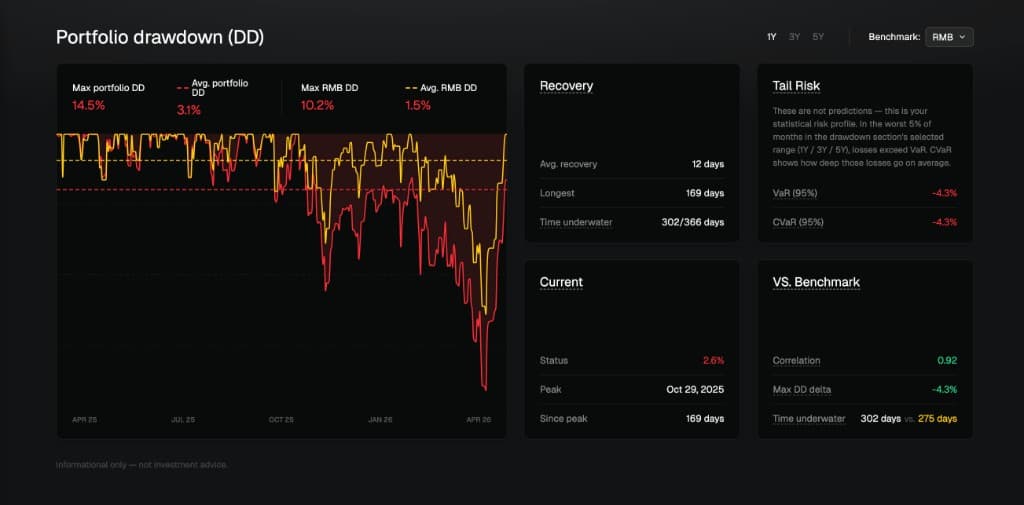
I need to be specific about what that means, because it's the central difference between Exent and everything else on this list. Every other platform evaluates stocks one at a time. Seeking Alpha tells you if a stock is a Quant Buy. Motley Fool tells you which stock to add this month. TipRanks tells you what analysts think about a specific ticker. Morningstar tells you a stock's fair value. That's useful information. But none of them ever looked at my holdings as a whole and said: 'You're 40% correlated to tech, your top 5 holdings represent 62% of your total exposure, and if rates rise 50bps, you're going to feel it across everything you own.' Exent did. And that was the moment I realized I'd been solving the wrong problem for three years.
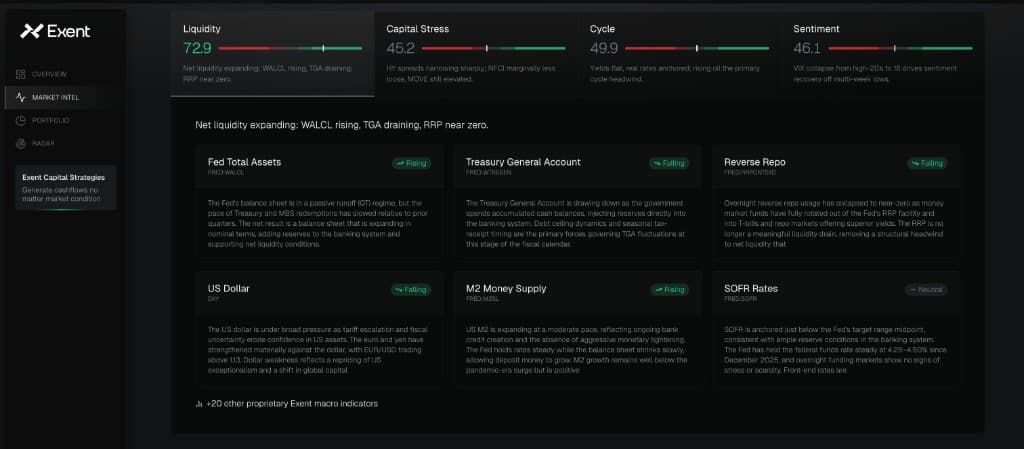
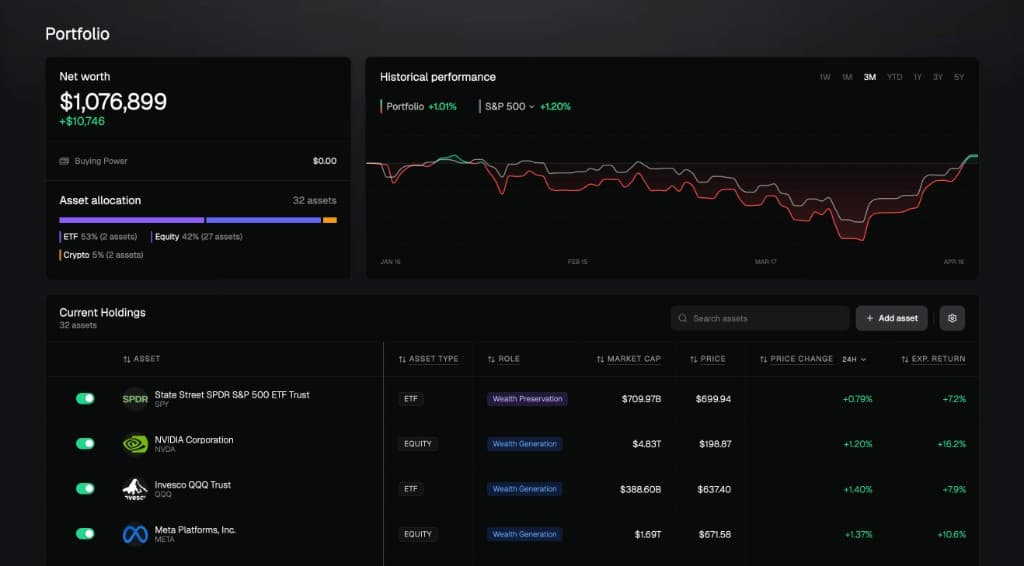
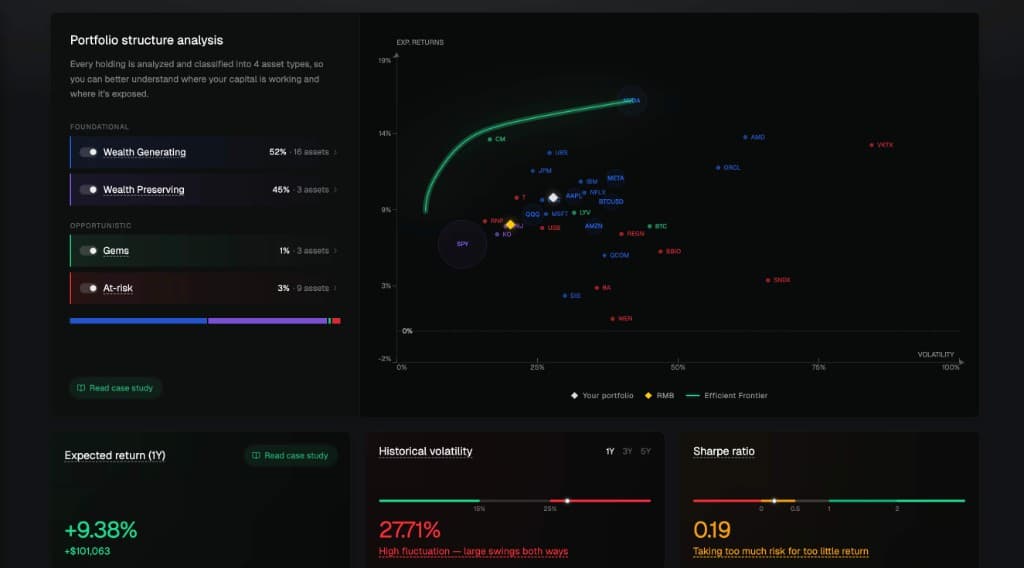
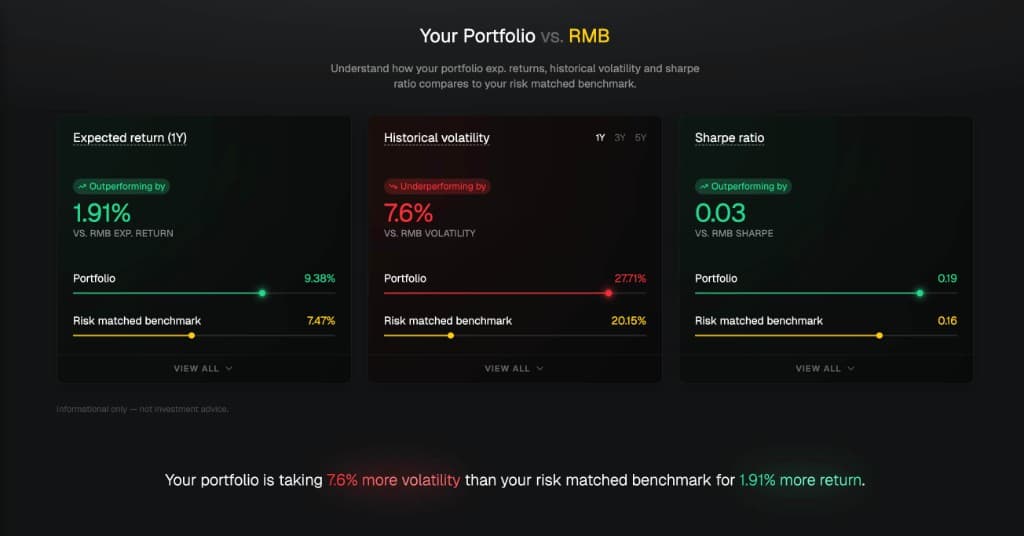
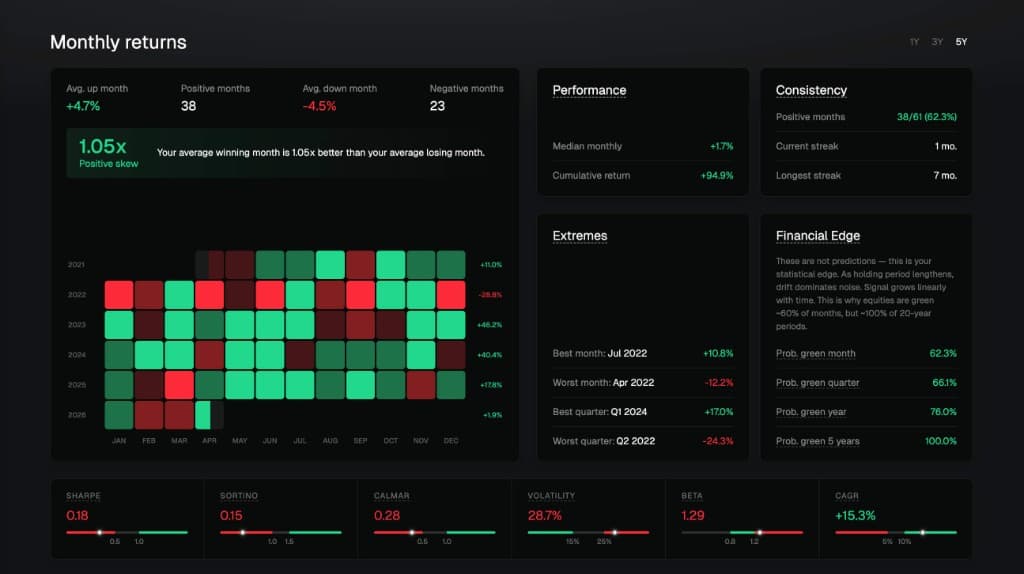
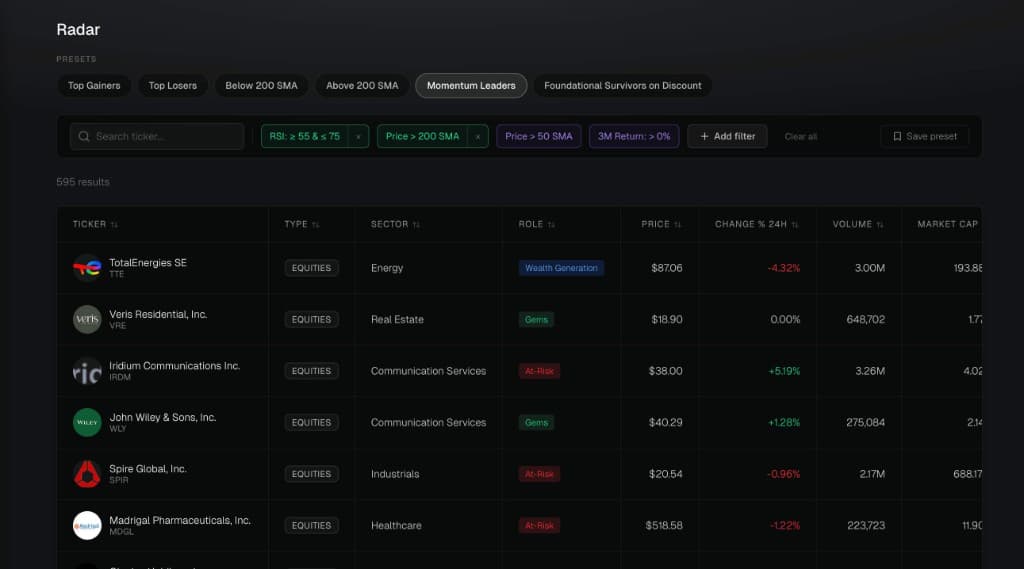
Market Overview
Portfolio Analysis – What a $500K/Year Advisor Does, In Your Hands
The core of Exent is an institutional-grade portfolio analysis engine. You connect your holdings and it doesn't just show you what's up or down – it maps the relationships between everything you own. Concentration risk: are you overweight in a sector without realizing it? Correlation analysis: will your 'diversified' holdings all drop together when the market turns? Sector exposure: where are you actually positioned relative to where the market is heading?
This is the analysis that wealth managers at firms like Goldman or Morgan Stanley run for clients with $5M+ accounts. It's the work that justifies $25K–$50K in annual advisory fees. Exent puts it in your hands for a fraction of that cost. For someone managing $1M with no advisor, that's not a feature – it's the product.
Market Intel – The Numbers That Changed How I Invest
Exent's Market Intel system includes the Kambo score – a proprietary predictive market regime indicator that tells you what the market is likely to do, not just what it already did. Here are the verified numbers directly from their performance dashboard:
| Strategy (2018–2026) | Total Return | CAGR | Sharpe | Max Drawdown |
|---|---|---|---|---|
| S&P 500 Buy & Hold | +143.1% | 12.3% | 0.48 | -34.1% |
| Market Intel Adjusted S&P 500 | +1,491.1% | 43.6% | 2.35 | -19.9% |
| Graduated Strategy | +314.6% | 20.4% | 1.92 | -10.3% |
| Risk ON (Conservative) | +198.6% | 15.4% | 1.57 | -9.8% |
During the worst market drops of the last 8 years, the S&P 500 fell 34.1%. A million-dollar portfolio becomes $659K. With the Graduated strategy, the same portfolio drops to $897K. With the conservative Risk ON strategy, it only drops to $902K – a loss of less than $100K compared to $341K for buy-and-hold.
On the upside: the Market Intel Adjusted S&P 500 strategy turned $100K into over $1.59M in 8 years. The same $100K in the S&P 500 became $243K. That's not a marginal improvement. That's a fundamentally different financial outcome – the kind that determines whether you retire at 58 or keep working into your 60s.
Radar – Seeing Upside Before the Crowd
Radar aggregates consensus price targets from Wall Street's top analysts and shows you the percentage gap between where a stock trades today and where the Street thinks it's going over the next 12 months. Instead of reading 30 individual analyst reports and trying to figure out the consensus yourself, you see the opportunity mapped out in seconds.
What I use it for most: running screens at 50%+ gap across equities and crypto, then drilling into the names I don't immediately recognize. Some of the most interesting hits aren't the mega-caps everyone already owns — they're mid-cap names analysts are quietly bullish on that wouldn't otherwise hit my radar. A few of those have since closed the gap meaningfully.
Daily Market Overview – 10 Minutes of Clarity
Every morning, one screen tells me what actually matters. Which headlines affect my specific holdings. Which sectors are moving and why. What the current Kambo regime signal says about risk conditions. It's the financial equivalent of a morning briefing from a chief investment officer, compressed into something I can consume between dropping the kids off and starting work.
Before Exent, I was spending 45 minutes scrolling Seeking Alpha, reading three or four articles with contradicting conclusions, and still feeling like I was missing something. With Exent, a quick scan and I know exactly where I stand. That time savings alone – 35 minutes a day, five days a week – adds up to over 150 hours a year.
The Interface – Premium Means Something Here
Clean. Focused. No banner ads, no upsell popups, no 'upgrade to Pro+' overlays. Everything you need is on the screen; everything you don't isn't. It's built on the same AI and data infrastructure used by Goldman Sachs and Morgan Stanley – Claude, OpenAI, and proprietary models – but designed for a self-directed investor who has 10 minutes, not a team of analysts with 10 hours.
Who Exent Is For – And Who It's Not For
Exent is built for self-directed investors with real capital at stake ($100K+) who don't have time to monitor everything manually. If you want to understand how your holdings actually interact – where your real risk sits, and whether you're being rewarded for it – Exent is built for that.
Seeking Alpha Review

✅ Pros
- Largest investment research community: 18,000+ contributors, 10,000+ articles/month
- Quant Ratings (Value, Growth, Profitability, Momentum, EPS Revisions) historically outperform S&P
- Alpha Picks: +89% vs S&P +26% since July 2022
- Portfolio 'Health Score' with brokerage account linking
- Stock screener is powerful – dozens of filters
- Huge community with valuable comment sections
- $299/year for Premium – reasonable for the depth
⚠️ Cons
- Information overload – 10,000 articles/month is a firehose
- Stock-level only – no portfolio-level analysis
- No predictive market intelligence – purely reactive
- Cluttered interface – ads, upsells, paywalls, banners
- Contributor quality is wildly inconsistent
- Alpha Picks costs extra – $449/yr on top of Premium ($299)
- No daily 'what matters today' summary
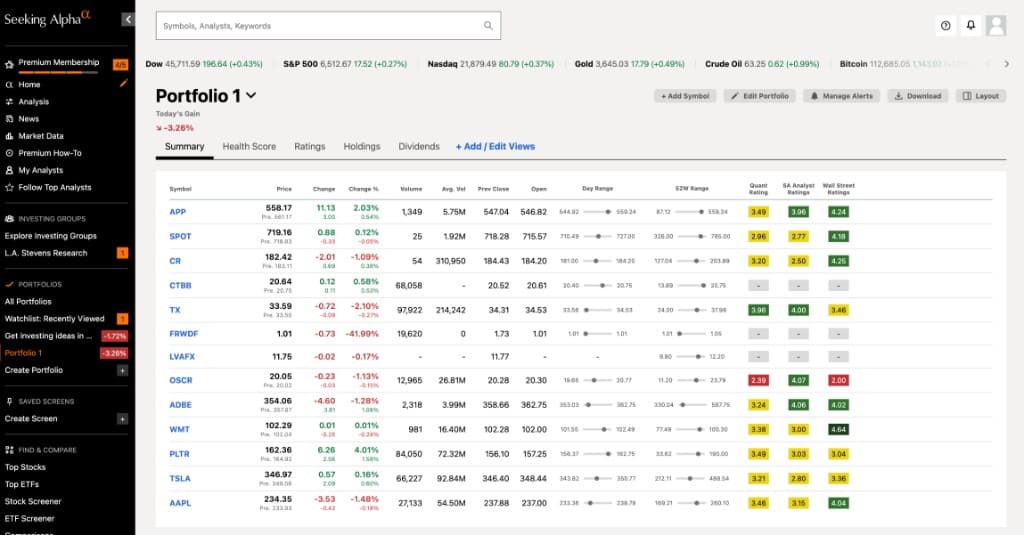
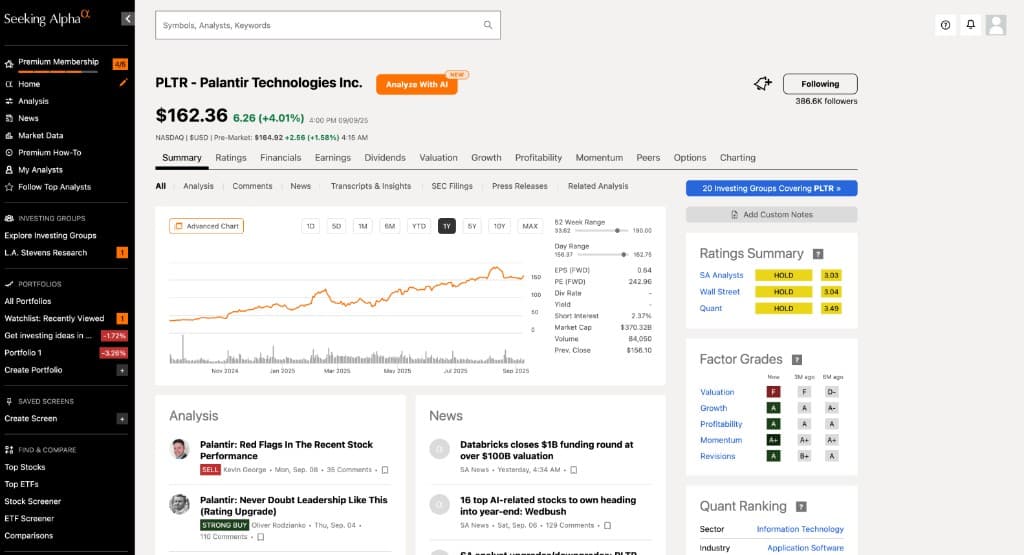
Seeking Alpha is the tool I used the longest – almost three years. It's the single largest investment research community on the internet, and the depth is real. 18,000+ contributors publishing 10,000+ articles per month means there's almost always a bull case and a bear case for any stock you're considering. The comment sections are often more valuable than the articles themselves.
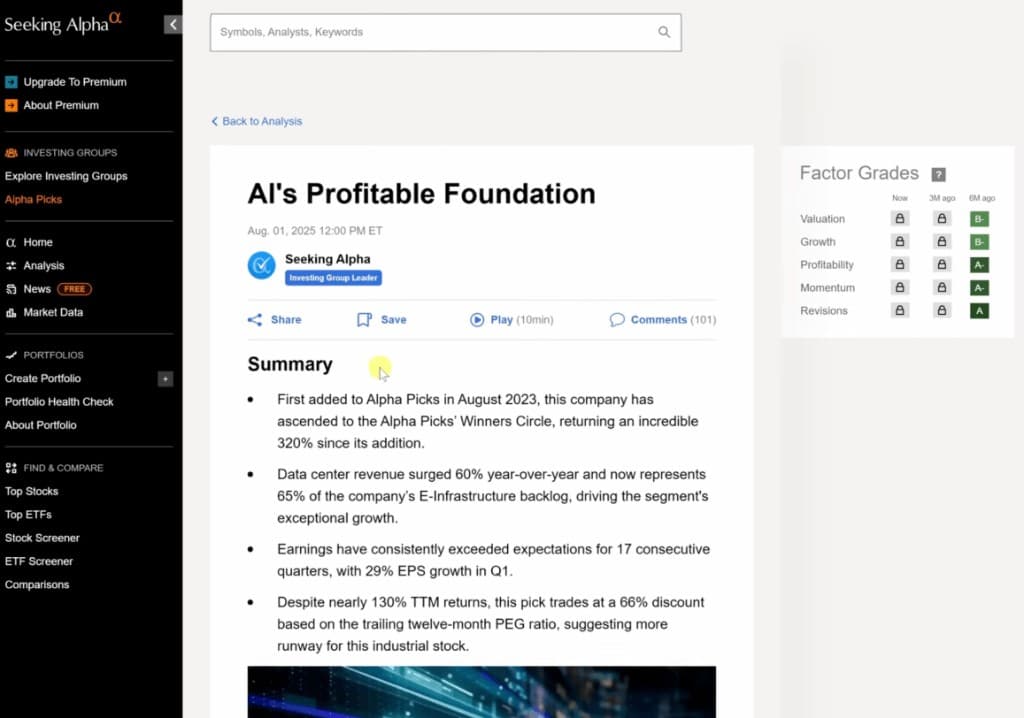
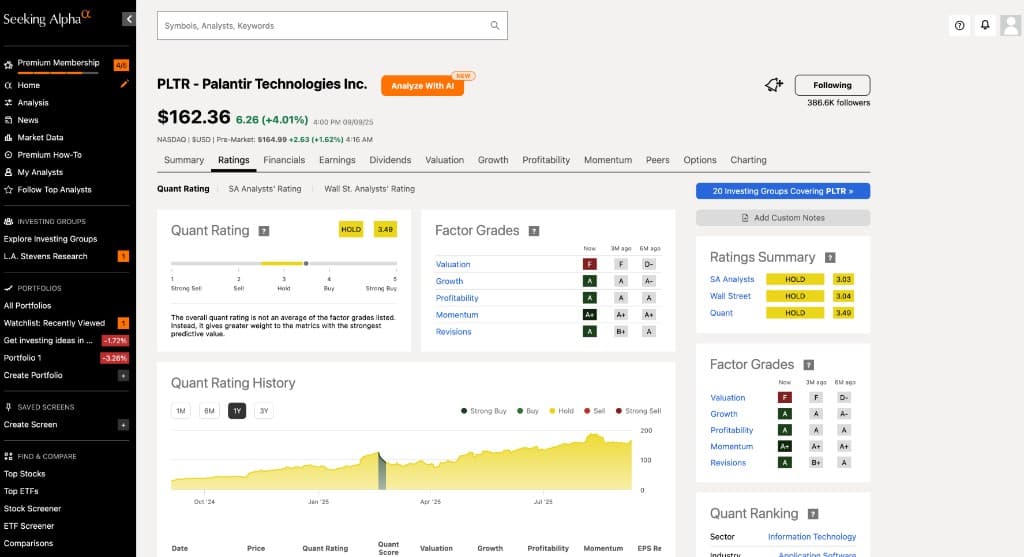
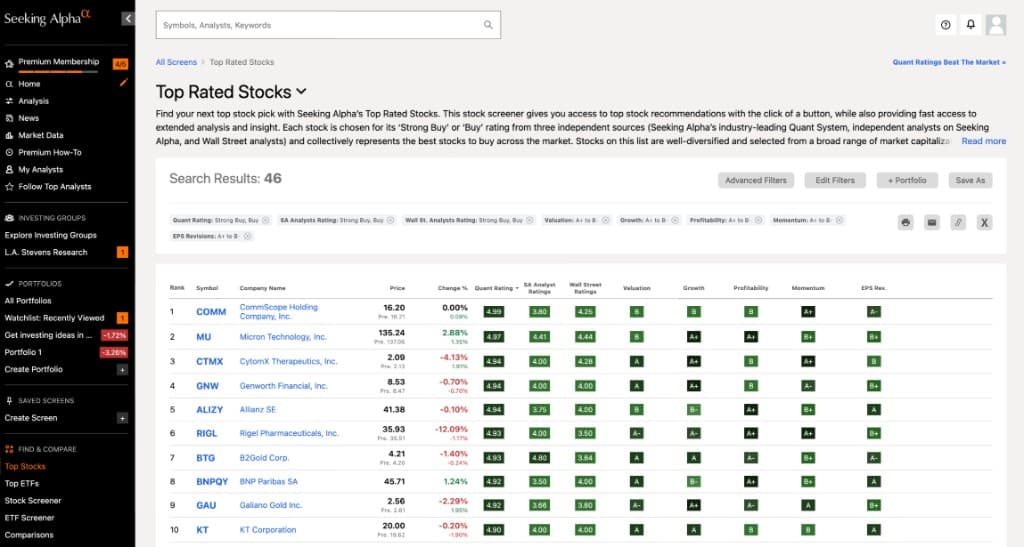
The Quant Ratings system is the real engine behind the platform. It evaluates every stock across five factors – Value, Growth, Profitability, Momentum, and EPS Revisions – and assigns a rating from Strong Buy to Strong Sell. Historically, Quant Strong Buys have outperformed both Wall Street analyst consensus and the S&P 500.
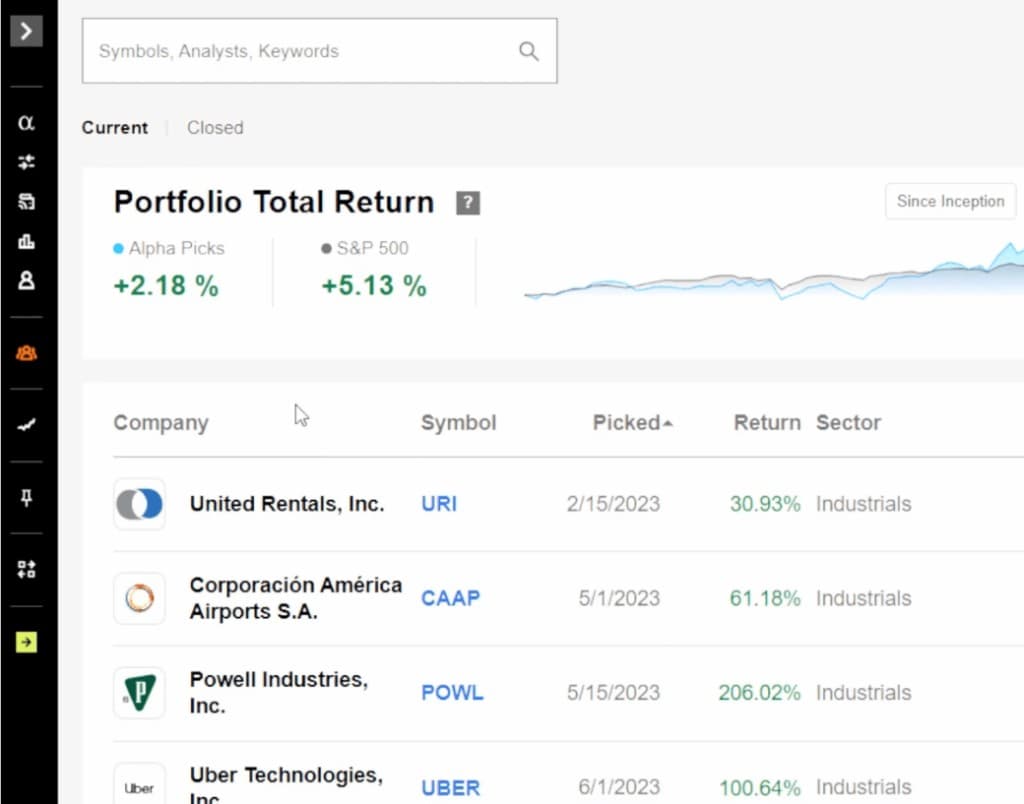
Their Alpha Picks newsletter has a strong track record: roughly +89% since July 2022, compared to the S&P 500's +26% over the same period. You can link brokerage accounts and see an overall portfolio 'Health Score,' and the stock screener lets you filter by dozens of criteria simultaneously.
So why isn't it #1? Because I spent more time reading about investing than actually managing my portfolio. Ten thousand articles a month is drinking from a firehose. Contributor quality ranges from former hedge fund analysts to random bloggers with an opinion – and you have to learn who to trust the hard way. The interface is cluttered with ads, upsells, and paywalls. And most importantly, Seeking Alpha evaluates stocks individually. It never once told me that my portfolio was dangerously correlated, overexposed to a sector, or positioned wrong for what was coming.
Alpha Picks
Motley Fool Review

✅ Pros
- 20+ year track record – Stock Advisor avg returns 975% vs S&P 194% since 2002
- Dead simple: 2 picks per month, clear investment thesis, buy and hold
- Cheapest serious option: $199/year ($99 first year promo)
- Pre-built model portfolios: Cautious, Moderate, Aggressive
- Strong community and educational content
- 30-day money-back guarantee
⚠️ Cons
- Headline 975% driven by 2002–2010 picks (AMZN +10,000%, NFLX, NVDA)
- Stock-picking newsletter, not a portfolio tool
- 5+ year hold philosophy creates tension for pre-retirees
- No market intelligence or predictive signals
- Constant upsell funnel: Advisor → Epic → Epic Plus → Fool One
- Interface cluttered with promotional content
- No daily market overview
Motley Fool Stock Advisor is where a lot of us started. Over 500,000 subscribers, 20+ year track record, and a headline number that's hard to argue with: average returns of 975% vs. the S&P 500's 194% since inception in 2002. You get two stock picks per month, a 'Best Buys Now' list, and model portfolios for three different risk levels.
The appeal is simplicity. You don't need a finance degree. Two picks, clear reasoning for each, buy and hold for 5+ years. At $199/year – and $99 for your first year – it's the cheapest serious option on this entire list.
But here's what nobody tells new subscribers: those 975% lifetime returns are massively skewed by early picks from 2002–2010 that returned thousands of percent. Amazon. Netflix. Disney. Nvidia. Those picks were real. They were also made 15–20 years ago. Your actual experience as a subscriber starting in 2026 will look very different.
The bigger issue for me at 46: Motley Fool's philosophy is buy and hold for 5+ years. At 46, planning to retire at 58, I don't have infinite time horizons for every position. And Stock Advisor tells you what to buy – it doesn't tell you whether the pick makes sense for your existing portfolio.
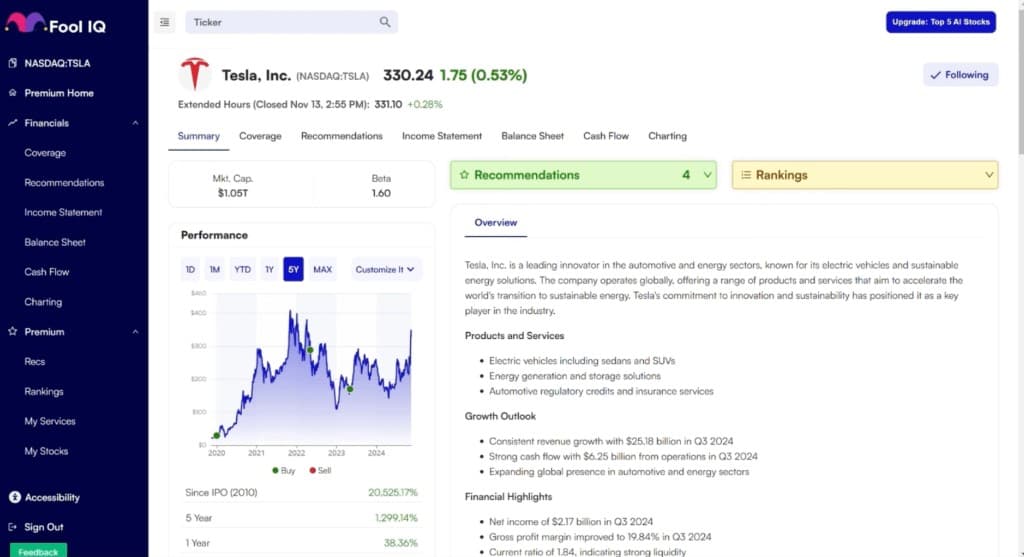
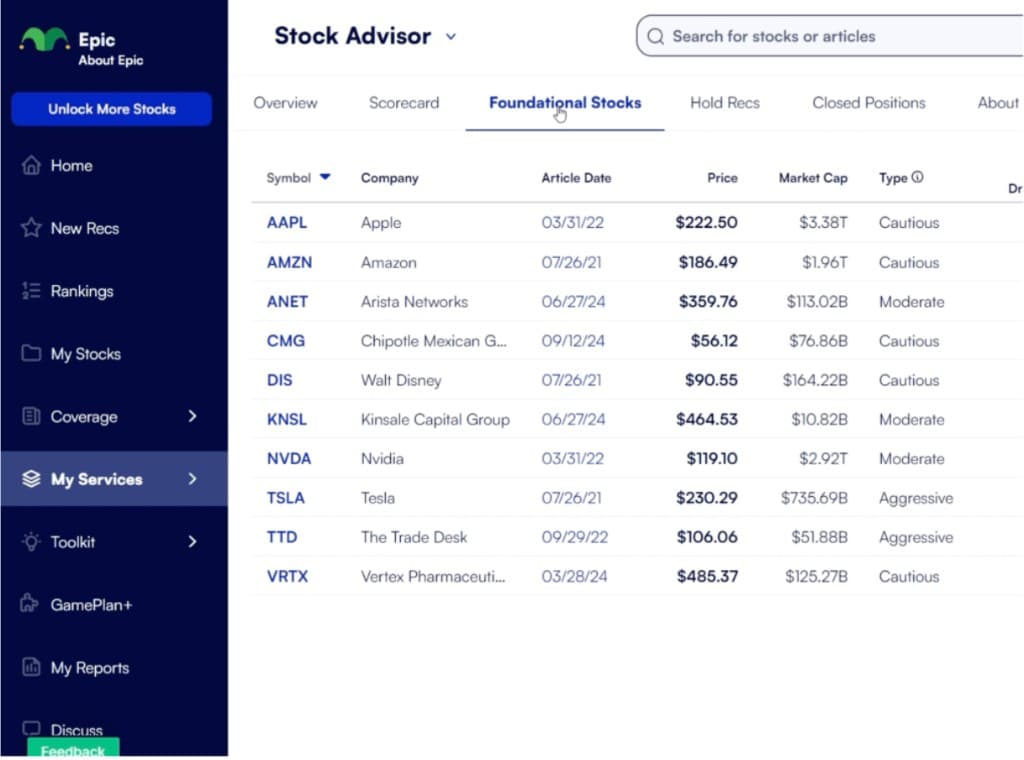
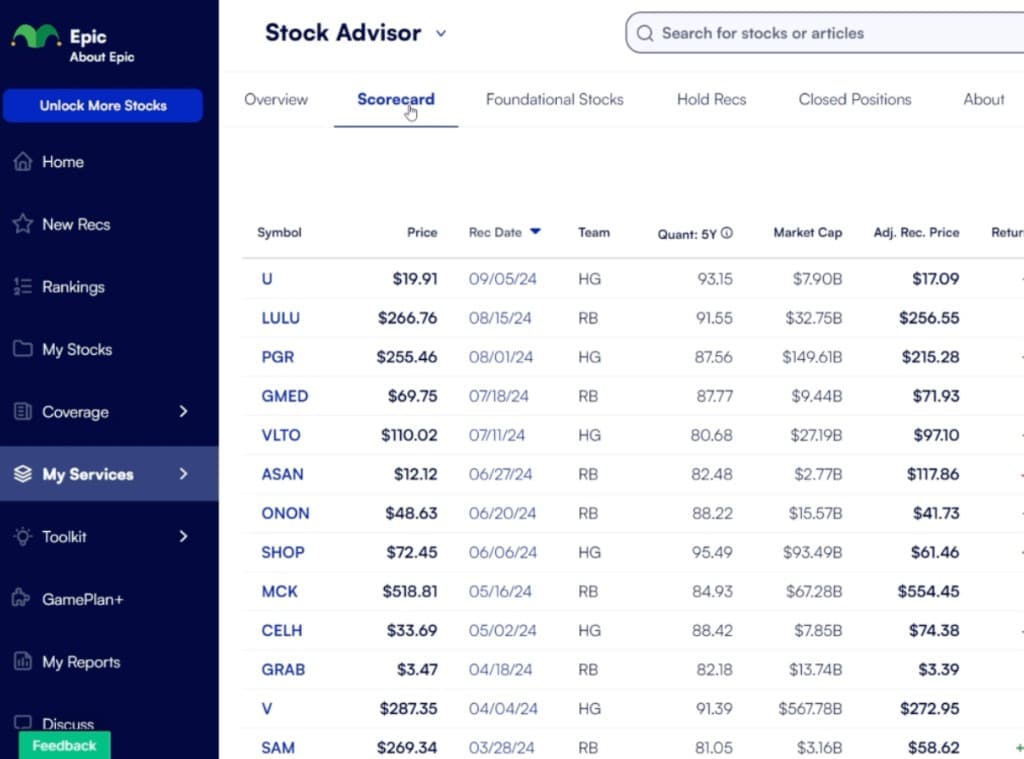
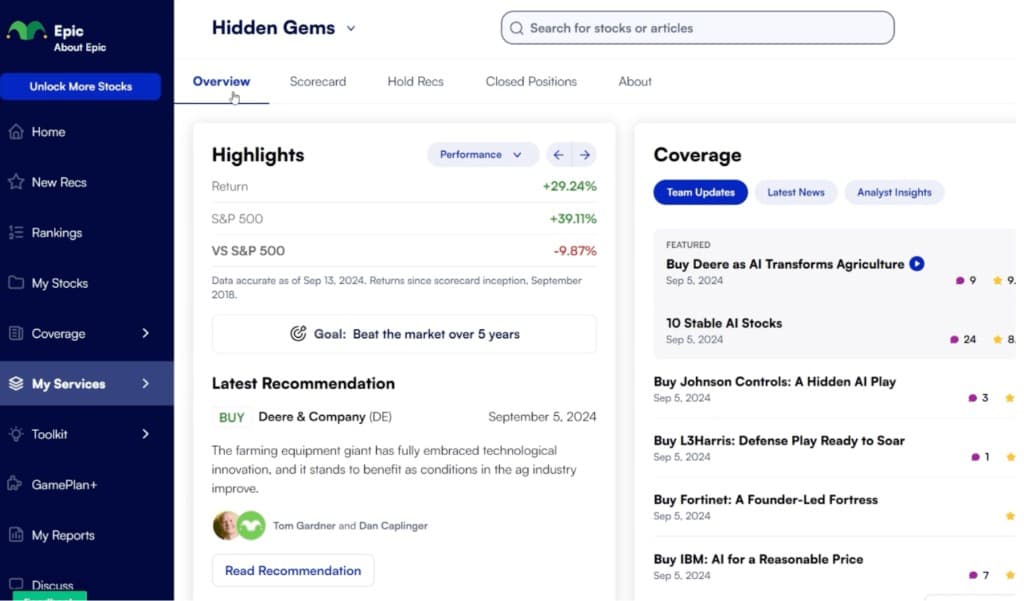
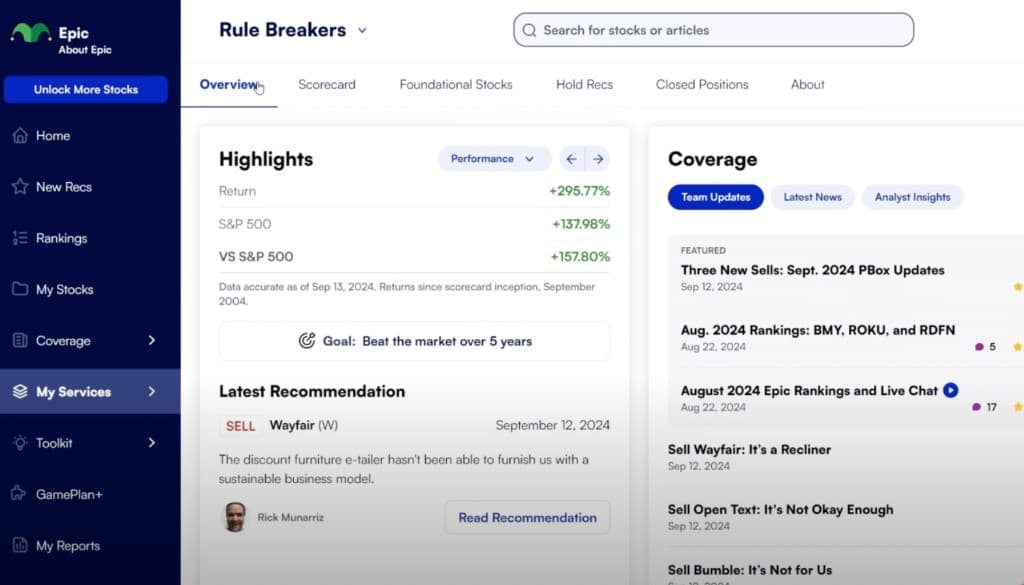
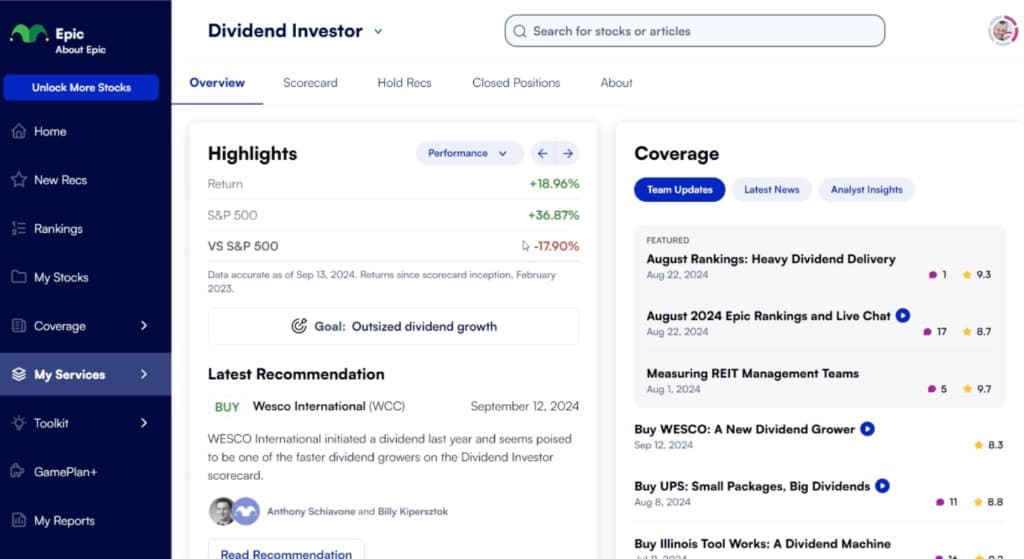
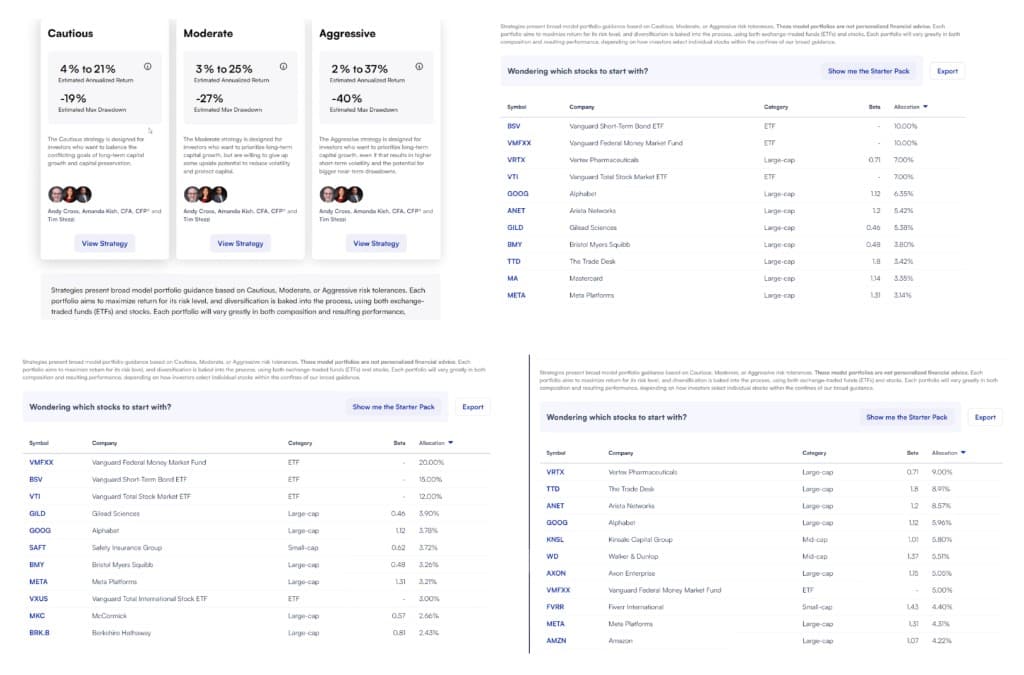
Fool IQ
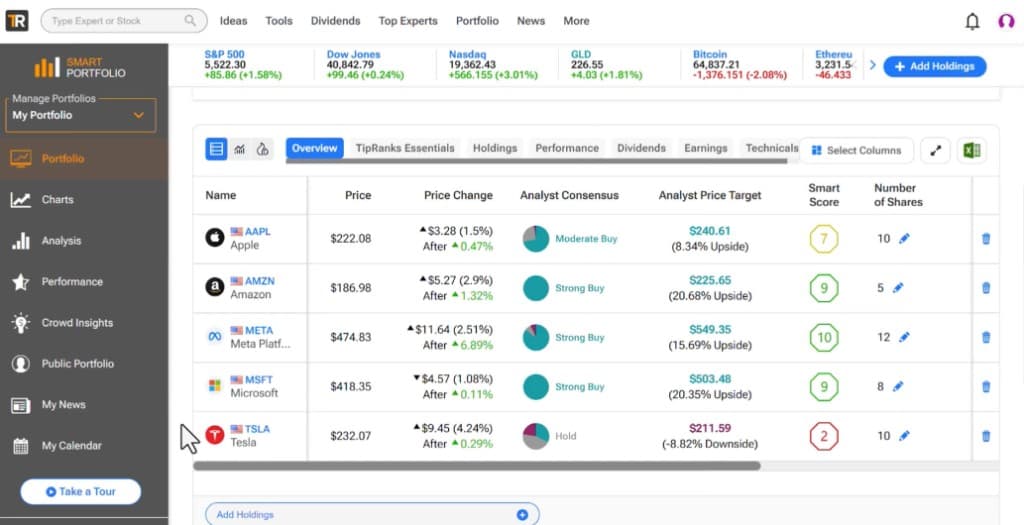
TipRanks Review

✅ Pros
- Best analyst accountability: tracks 8,000+ Wall Street analysts by real accuracy
- Smart Score (1–10) combines analyst ratings, insider activity, hedge fund moves
- Clean, well-designed interface – significantly better UX than most competitors
- Insider trading tracker – organized, easy to scan
- Strong global coverage beyond US markets
- Portfolio tracker with real-time analyst alerts
- Trustpilot 4.4/5
⚠️ Cons
- Research tool, not a decision tool – data about what experts think, not what to do
- No portfolio-level analysis – consensus per stock, zero insight into how holdings interact
- No market regime or predictive signals
- Promo-to-full-price jump: $99 first year → $299 renewal
- Smart Score is backward-looking – historical correlation, not predictive modeling
- Can lead to analysis paralysis
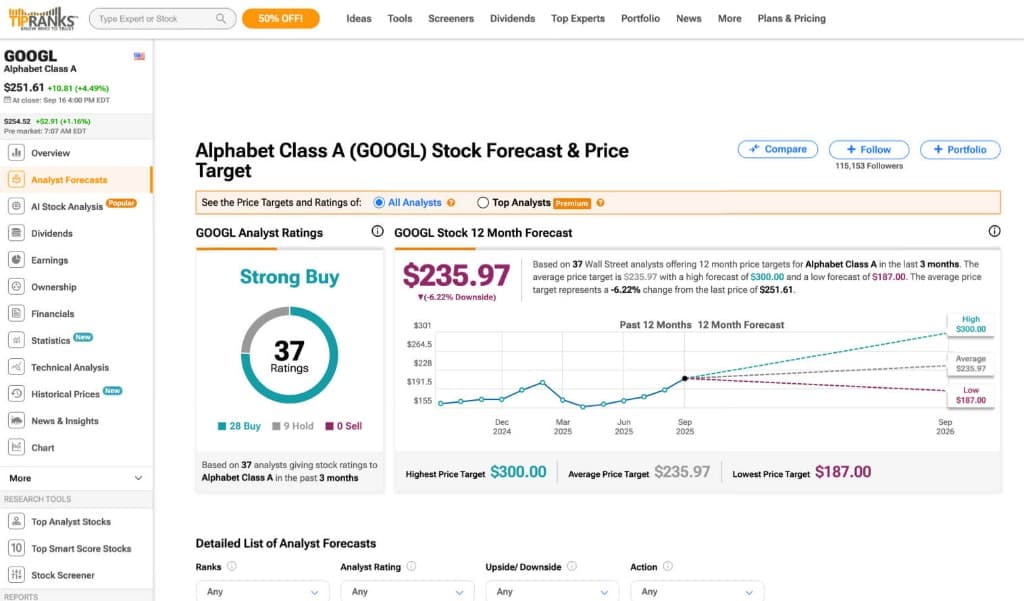
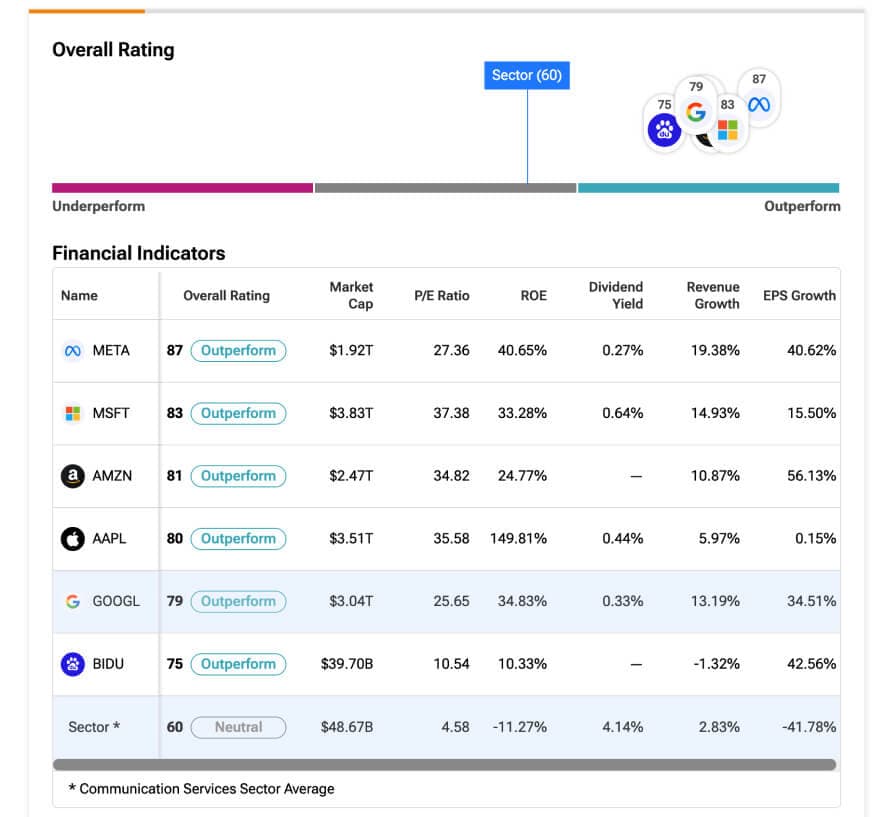
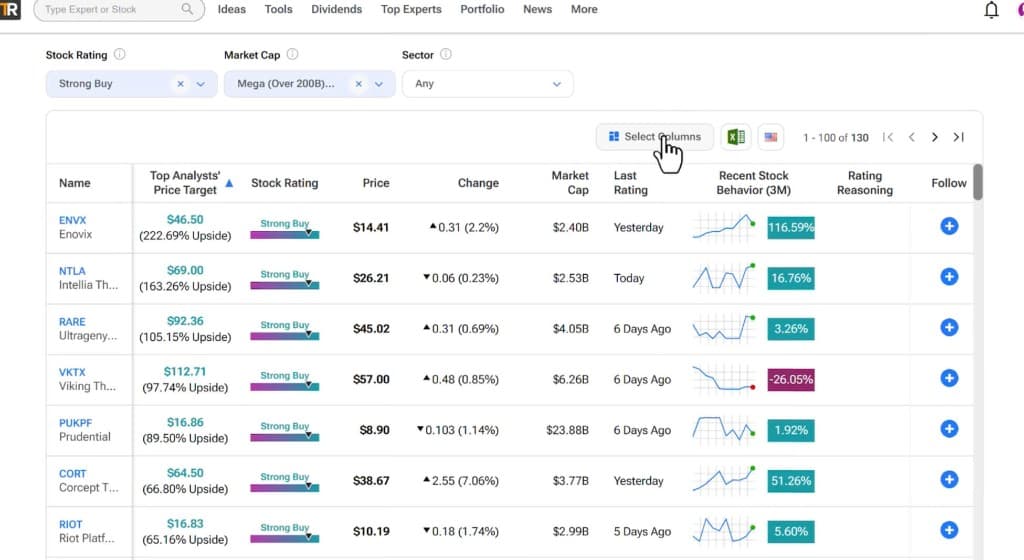
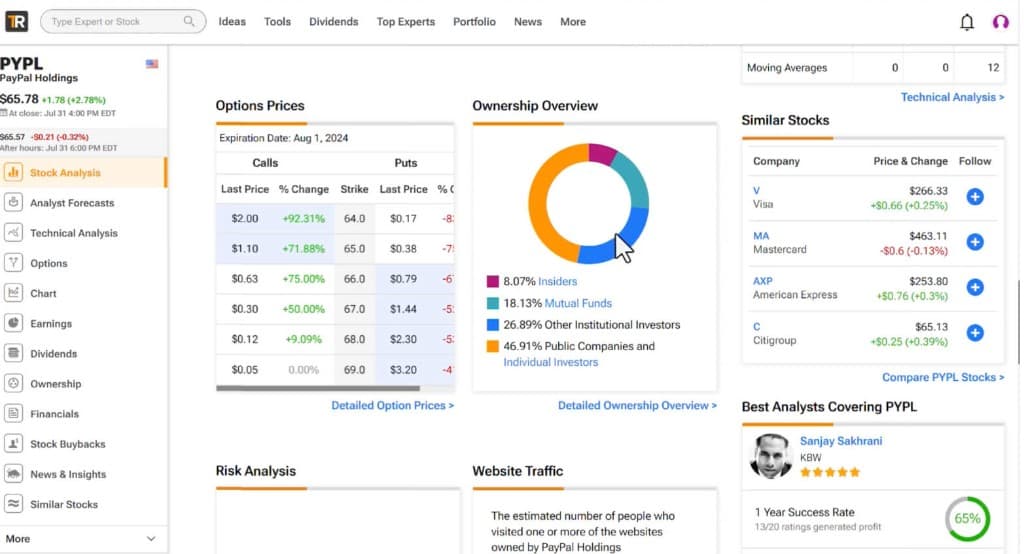
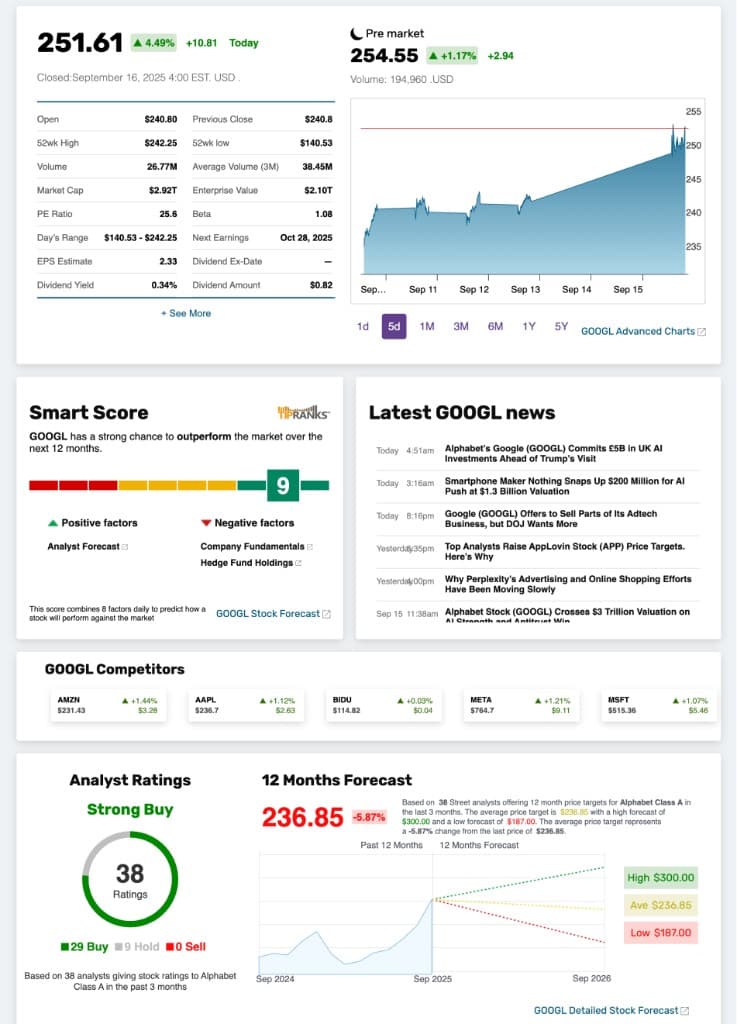
TipRanks does one thing better than anyone else: it tells you which Wall Street analysts are actually worth listening to. The platform tracks over 8,000 analysts and 96,000 financial experts, ranking every single one by their actual accuracy and average returns. You can see each analyst's success rate, hit rate by sector, and full track record before trusting a single word they say.
The Smart Score combines eight factors – analyst ratings, insider activity, hedge fund activity, technical factors, blogger sentiment, and more – into a single 1–10 number. Stocks scoring 8+ have historically outperformed. The interface is clean, the insider trading tracker is excellent, and global coverage extends well beyond US markets.
But TipRanks is a scouting report without a coach. It gives you data about what experts think. It doesn't tell you what your portfolio needs. There's no analysis of how your holdings interact, no predictive market signals, and no daily overview of what matters.
Watch out for the pricing: the $99 first-year promotional rate jumps to $299 on renewal.
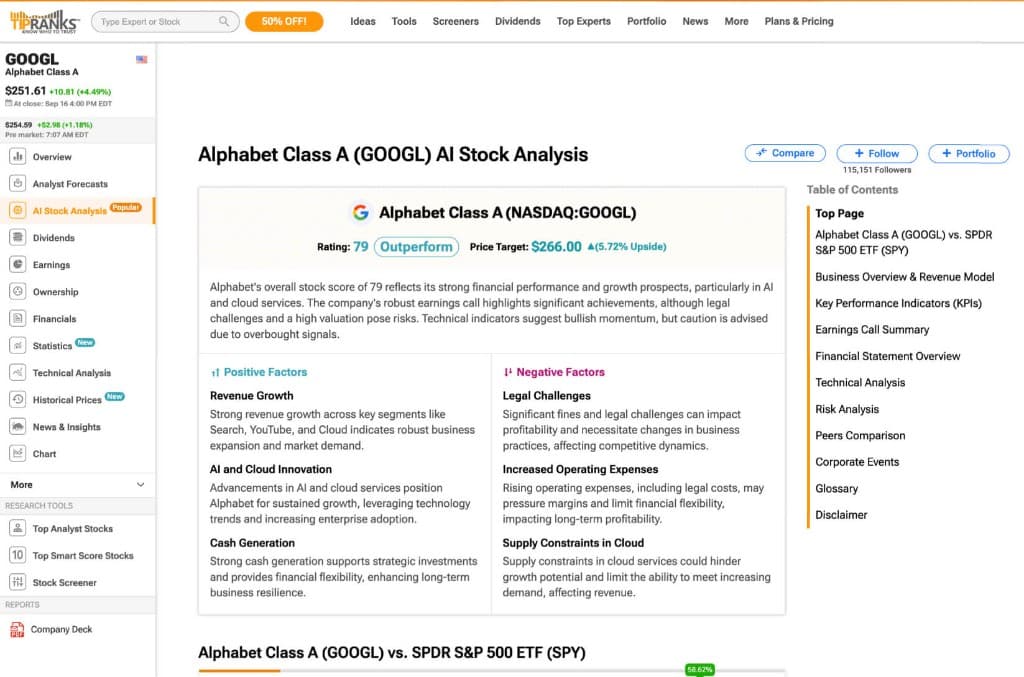
AI Stock Analysis
Simply Wall St Review

✅ Pros
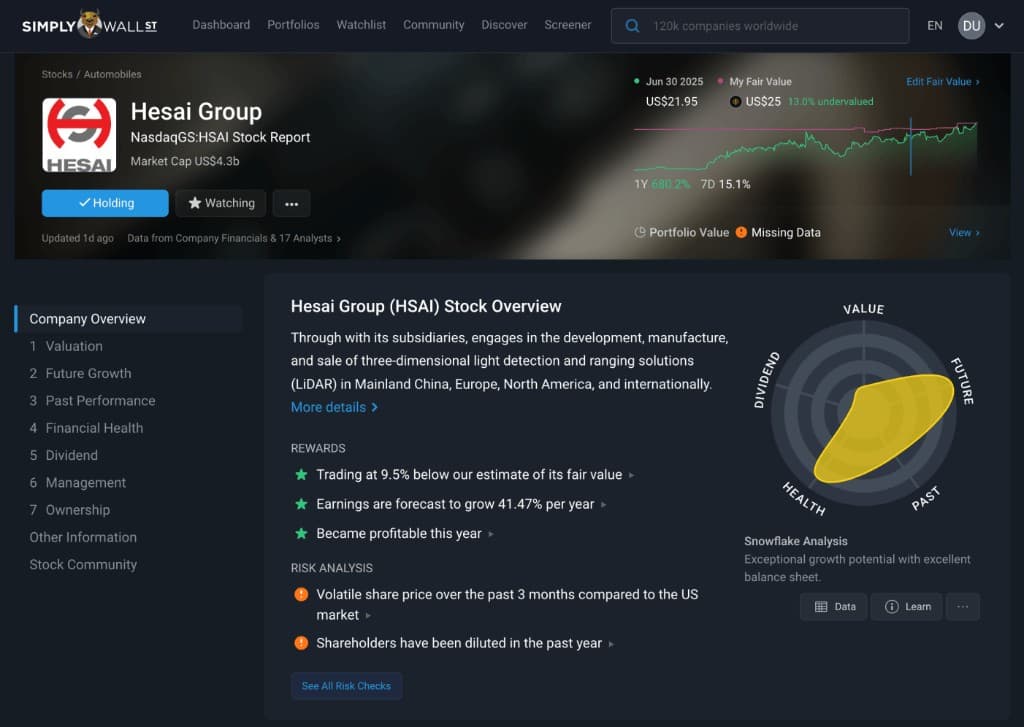
- Snowflake chart: understand a company's fundamentals in 30 seconds
- 120,000+ stocks across 90 markets – best global coverage at this price
- Data from S&P Global – institutional-grade underlying data
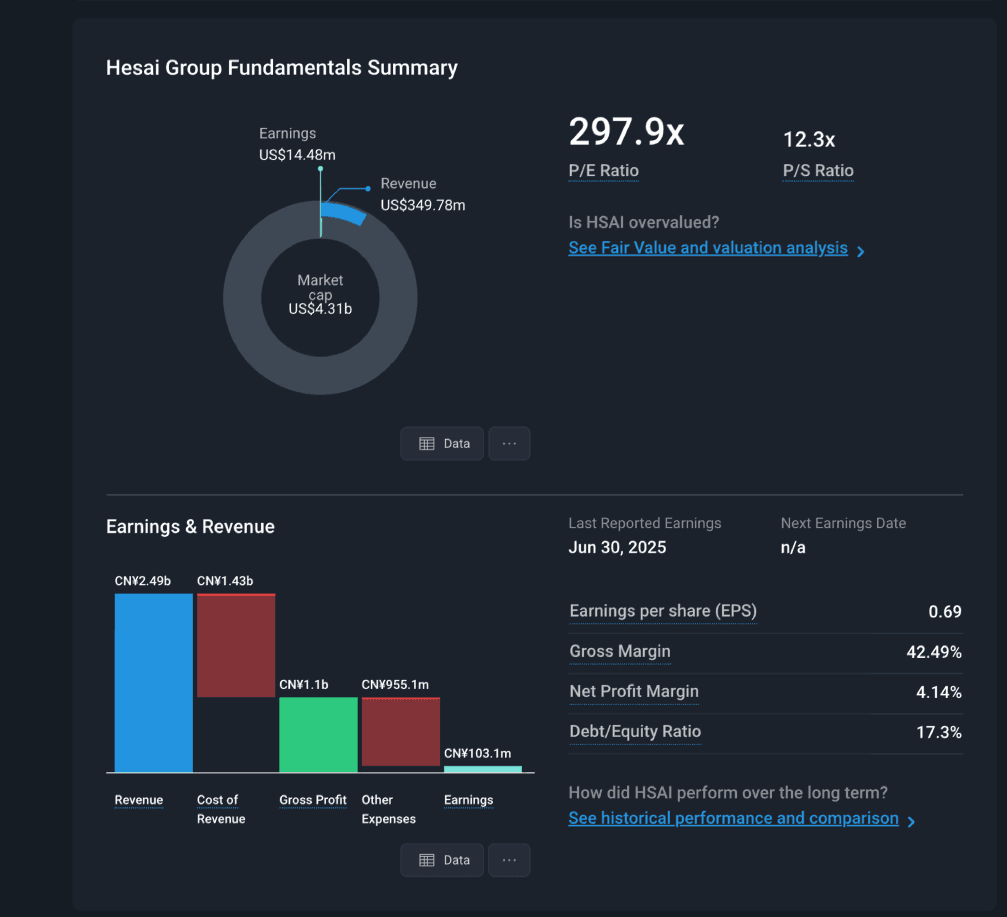
- Portfolio tracker with true return calculations (dividends, currency gains)
- Best value for money: ~$10/month ($120/year)
- Trustpilot 4.3 across nearly 5,000 reviews
- Excellent mobile app: 4.6 stars on iOS
- No aggressive marketing or upselling
⚠️ Cons
- No analysis of how holdings work together
- No predictive intelligence – shows where things stand, not where they're headed
- Snowflake scores not calibrated by industry
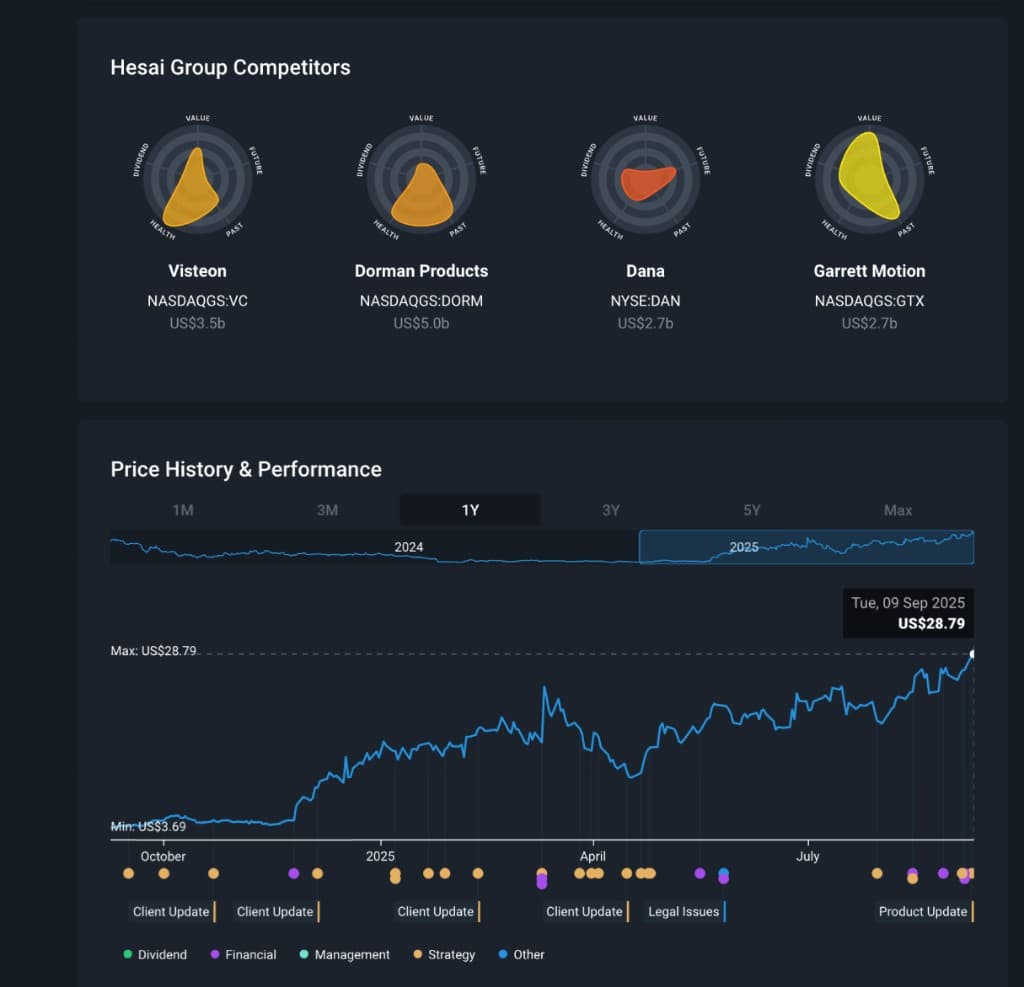
- Historical data caps at 10 years
- Some data accuracy issues
- No daily market overview or actionable daily summary
- Auto-renewal complaints
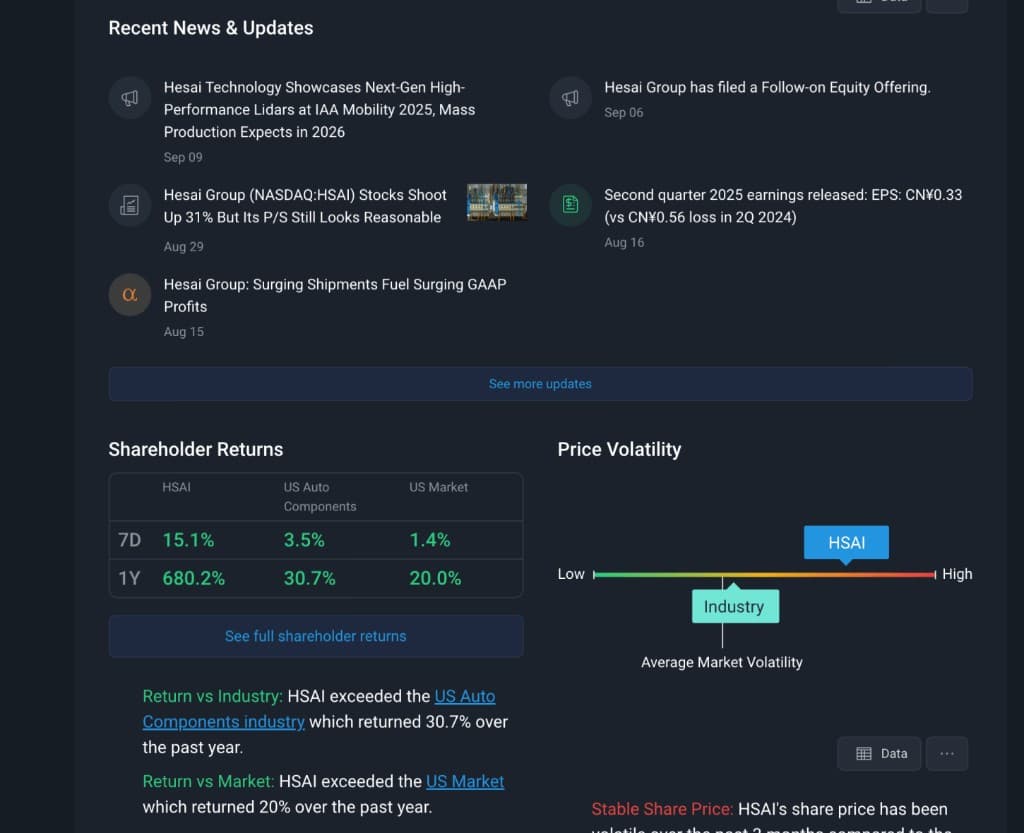
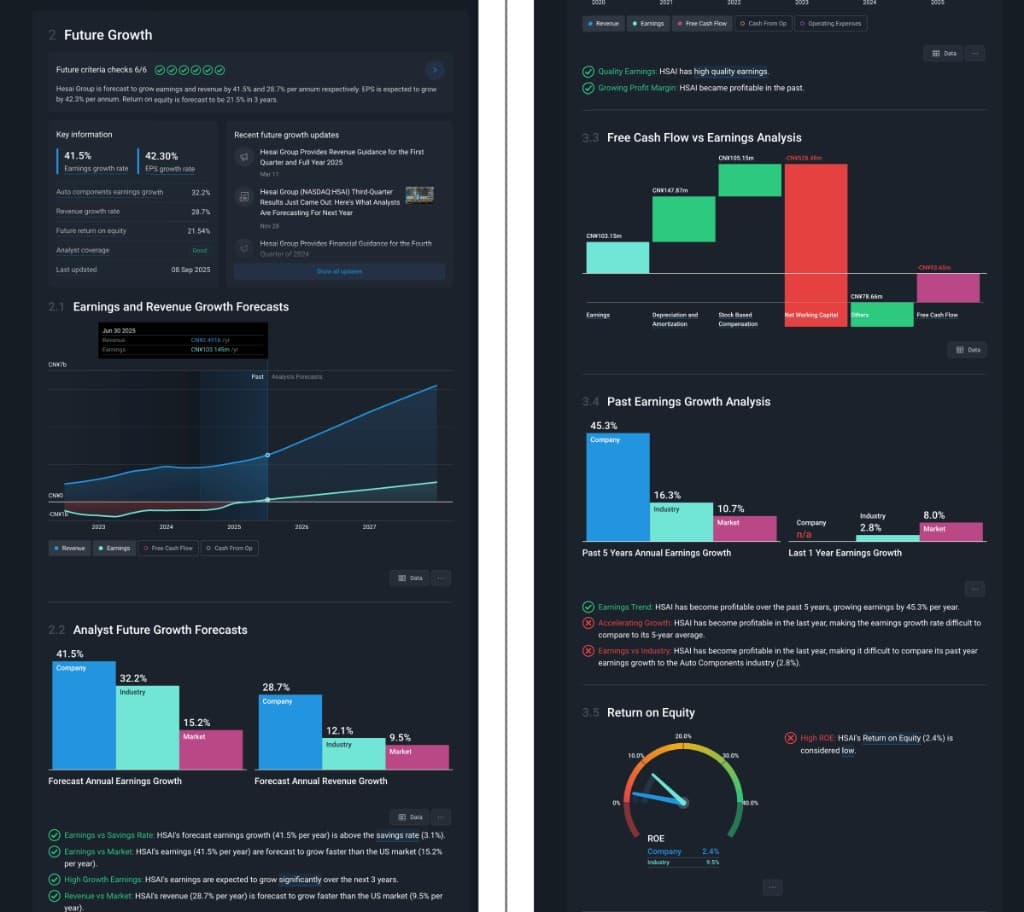
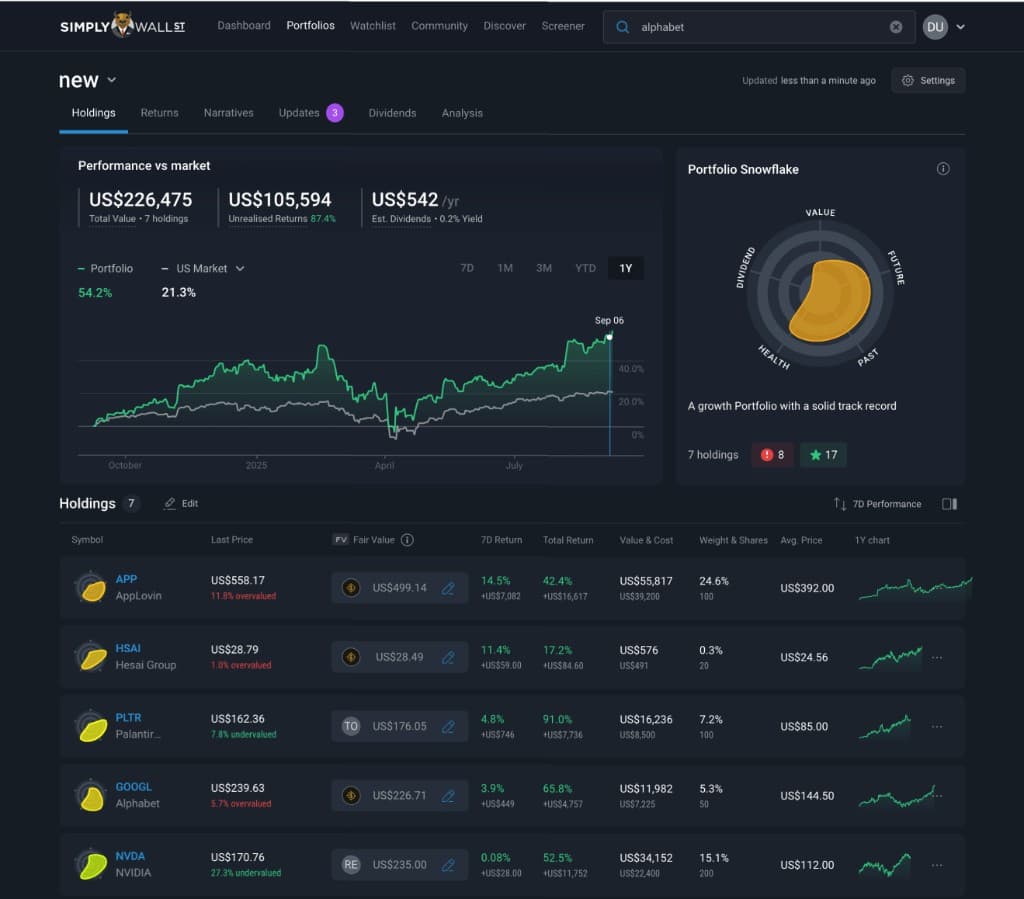
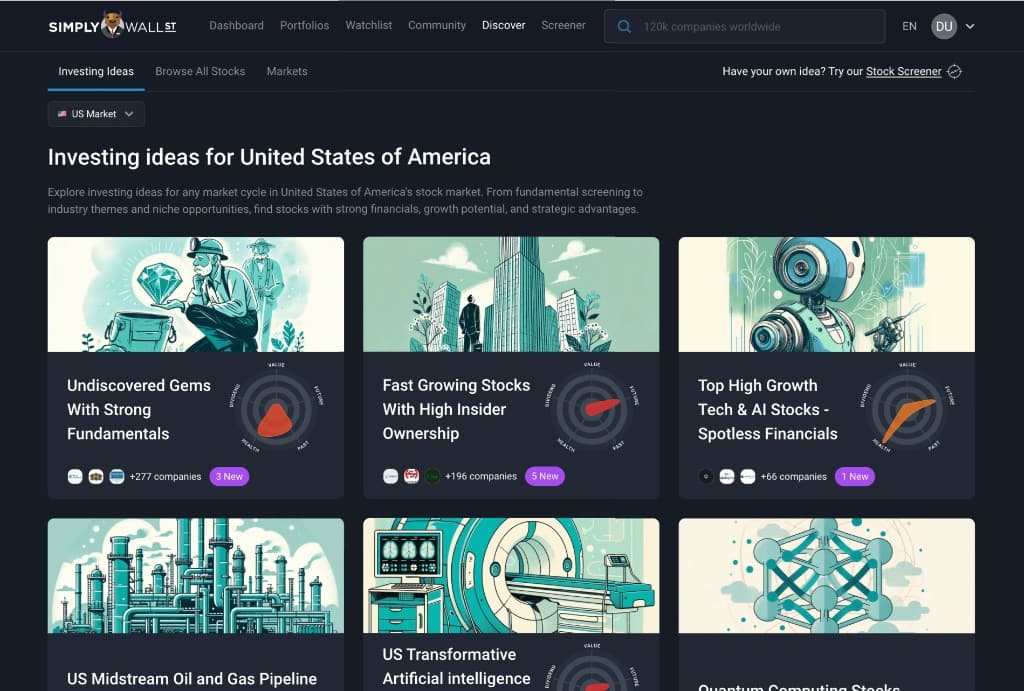
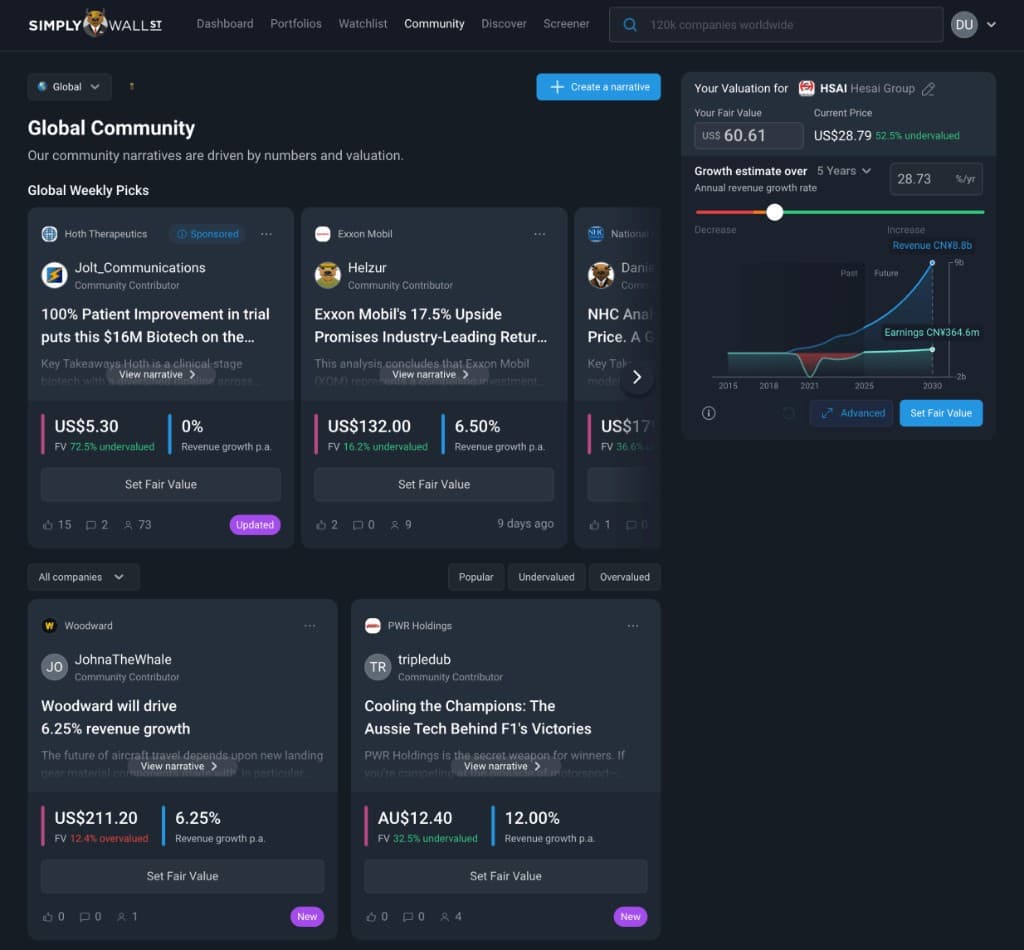
Simply Wall St has the best visual stock analysis on the market. Period. Their Snowflake chart – a five-axis diagram covering Value, Growth, Past Performance, Financial Health, and Dividends – lets you understand a company's fundamental profile in 30 seconds. My wife, who has never looked at a balance sheet in her life, understood a stock's strengths and weaknesses using it.
Coverage is massive: 120,000+ stocks across 90 markets, powered by S&P Global data. The portfolio tracker calculates true returns including dividends and currency gains. At $10/month, it is far and away the best value for money in this entire comparison.
I recommend it to every friend who's starting to take investing seriously. But for me at 46 with a $1M portfolio, I outgrew it. Simply Wall St gives you beautiful, detailed maps of every individual tree in the forest. What I needed was something that showed me the forest itself – and which direction the wind was blowing.
Stock Analysis – Overview
Danelfin Review

✅ Pros
- Proprietary AI – custom-built, not off-the-shelf. 10,000+ features per stock daily
- 8-year track record: 10/10 stocks outperformed S&P by +21% annualized over 3 months
- Explainable AI: see exactly why each stock scored the way it did
- Covers US and European markets, plus ETFs
- Portfolio tracking with average AI Score and diversity score
- Daily alerts on score upgrades/downgrades
- G2 rating 4.5/5
⚠️ Cons
- 3-month prediction window – swing tool, not long-term strategy
- No portfolio-level analysis
- No market regime intelligence
- Discount pricing requires 2-year contract lock-in
- Limited to US and some EU stocks
- Backtested win rate likely overstates live results
- Niche platform – relatively low brand recognition
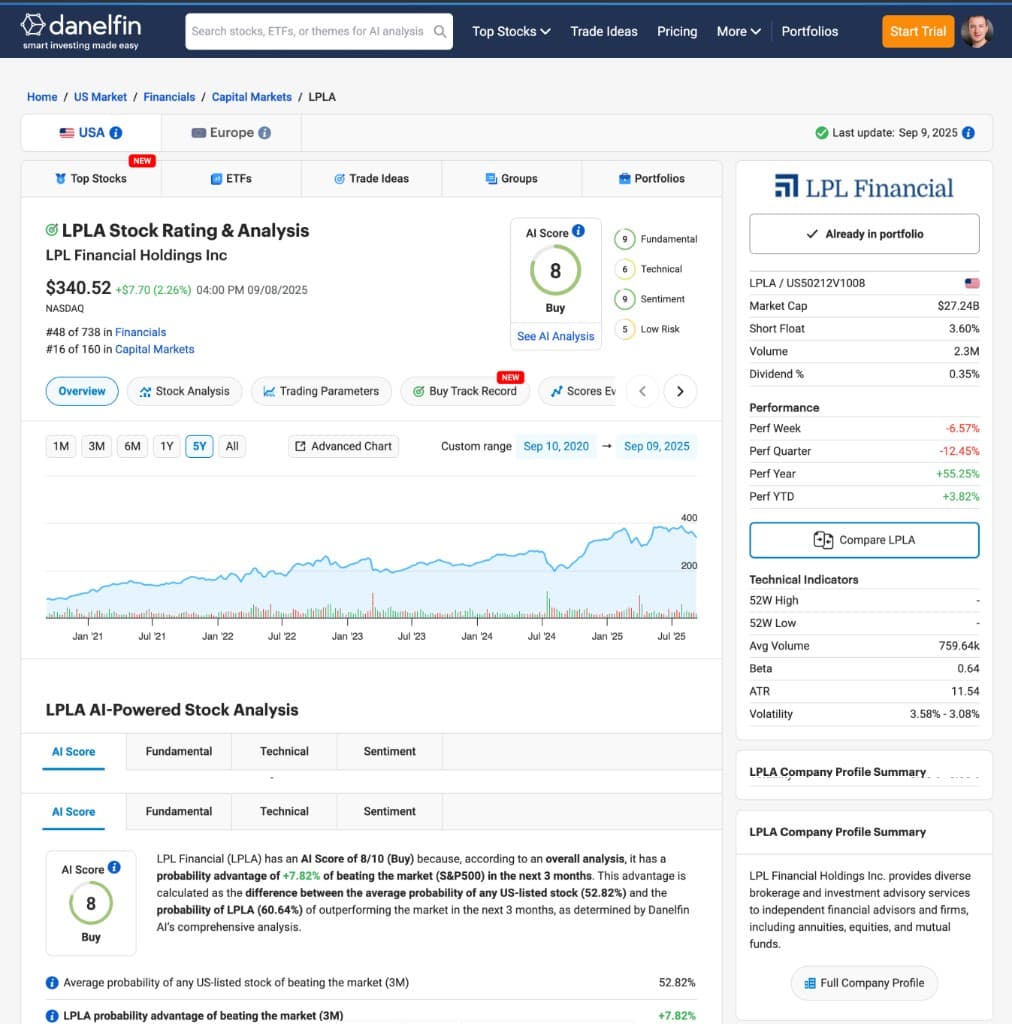
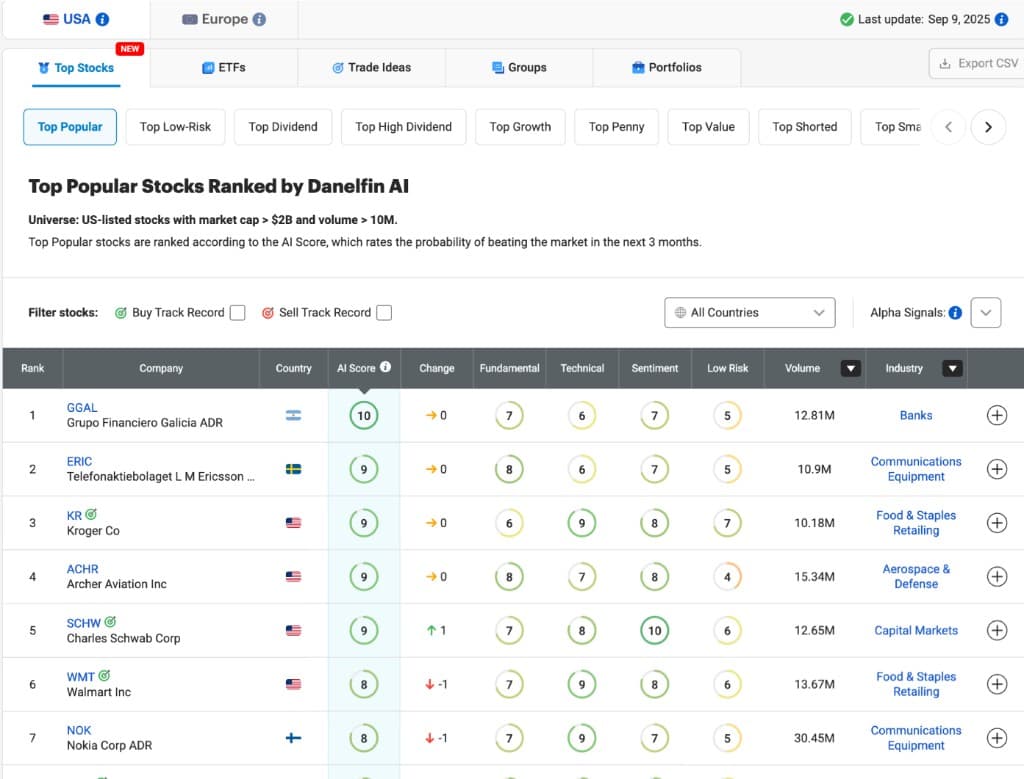
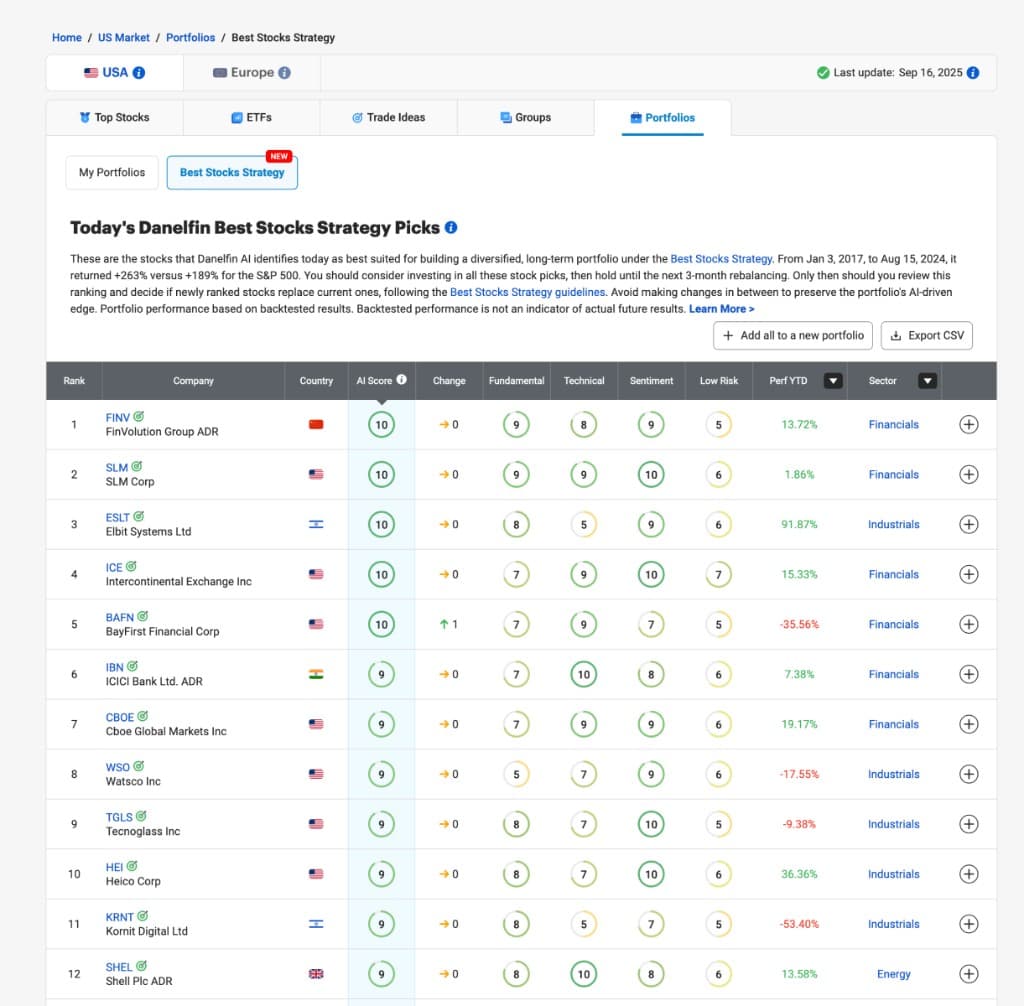
Danelfin is the most technically interesting AI tool on this list after Exent. Based in Barcelona, it builds proprietary machine learning models that process over 10,000 features per stock daily – fundamentals, technicals, and sentiment – to generate an AI Score from 1 to 10 predicting whether a stock will beat the S&P 500 over the next 3 months.
The track record is legitimate: since 2017, US stocks with a top score of 10/10 have outperformed the S&P 500 by an average of +21% annualized over 3-month periods. The 'Explainable AI' feature is rare and refreshing – you can see exactly which factors drove a stock's score.
But the 3-month prediction window means this is fundamentally a medium-term trading tool, not a long-term portfolio strategy. At 46, I'm not trying to optimize 90-day trades – I'm trying to build a portfolio that compounds over the next 12 years. Good complement, not a replacement.
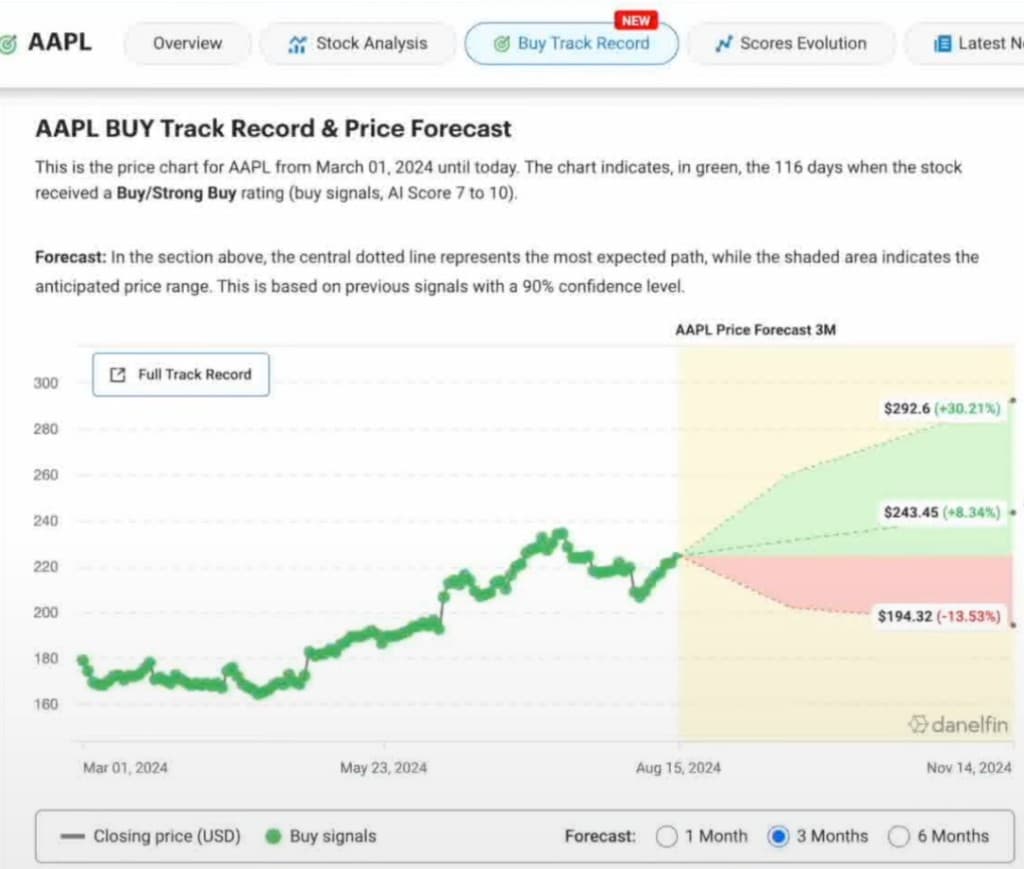
Stock Analysis View
Investing.com Review

✅ Pros
- Massive free content: real-time quotes, charts, news from Reuters, CNBC
- ProPicks AI: 6 US strategies + 11 global, trained on 25 years of data
- Fair Value estimates on individual stocks
- WarrenAI chat – natural language stock questions
- 72,000+ stocks, 30 regions, 20+ languages
- Affordable: Pro from ~$16/month
⚠️ Cons
- ProPicks returns non-replicable – support admitted weighting is undisclosed
- Interface is cluttered: ads, banners, pop-ups everywhere
- Two-tier paywall: features locked behind Pro+ after paying for Pro
- Content aggregator – most news syndicated from other sources
- No portfolio-level analysis whatsoever
- Hard to cancel – multiple user complaints
- No predictive market regime signals
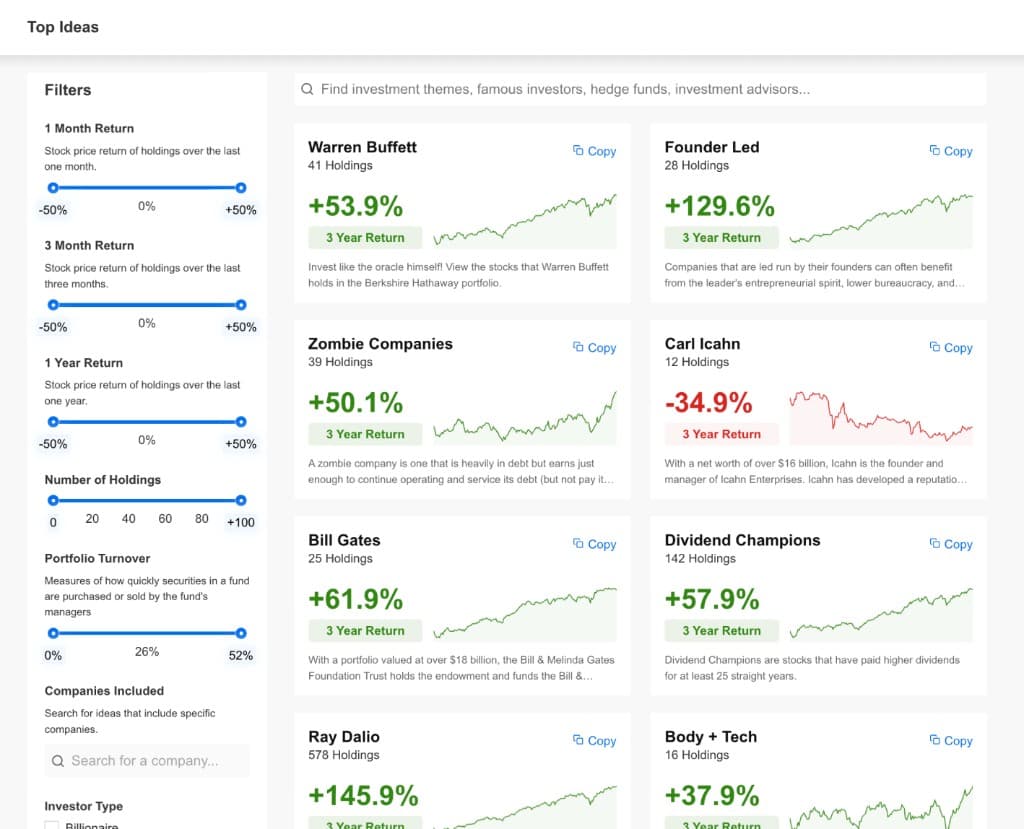
Investing.com is one of the biggest financial data portals in the world – 30 regions, 20+ languages, real-time quotes and charts on 72,000+ stocks. The free version is genuinely useful for checking a stock price, reading a quick headline, or getting a Fair Value estimate. I use it for that and nothing more.
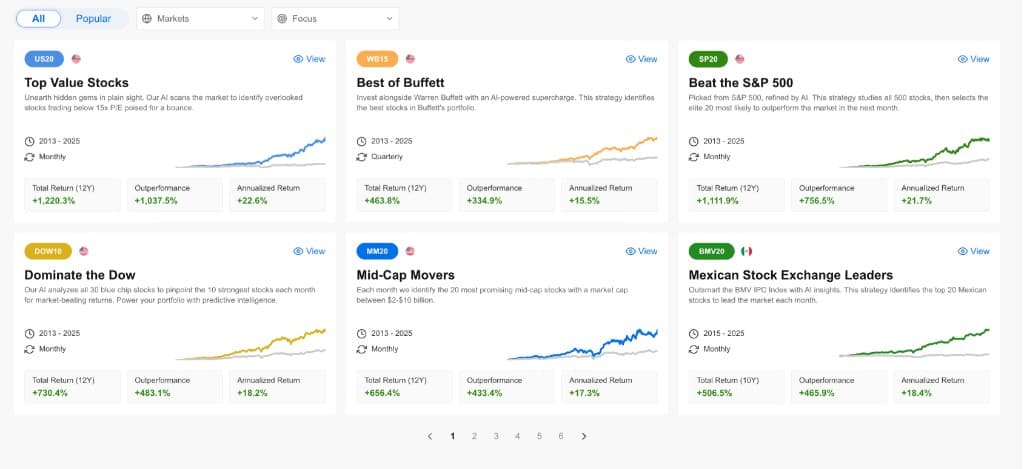
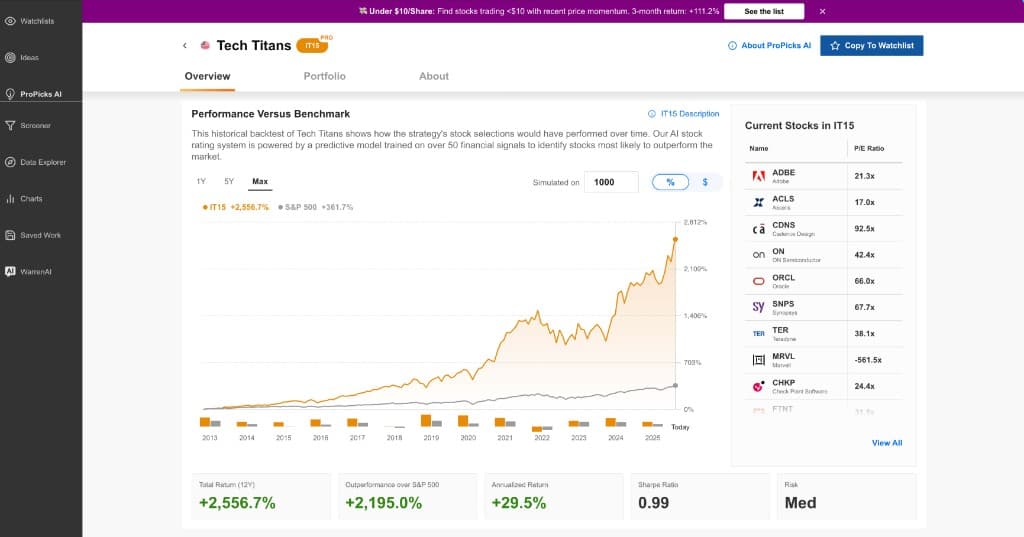
Their premium play is ProPicks AI – AI-powered stock strategies built on Google Vertex AI, trained on 25 years of historical data and 100+ financial metrics. They claim ProPicks outperformed the S&P 500 by roughly 46% in its first year. In practice, it's a different story.
A subscriber reported being unable to reproduce ProPicks' claimed returns. When they pressed Investing.com's support team, the response was revealing: they admitted the weighting system is proprietary and undisclosed, making it 'nearly impossible for individual investors' to match the reported performance. When your own customer support tells users your results can't be reproduced, that's a fundamental credibility problem.
The interface is the Times Square of investment platforms. Ads, banners, pop-ups, upgrade prompts – everywhere. And if you pay for Pro expecting the full experience, you'll quickly discover that many useful features are locked behind Pro+.
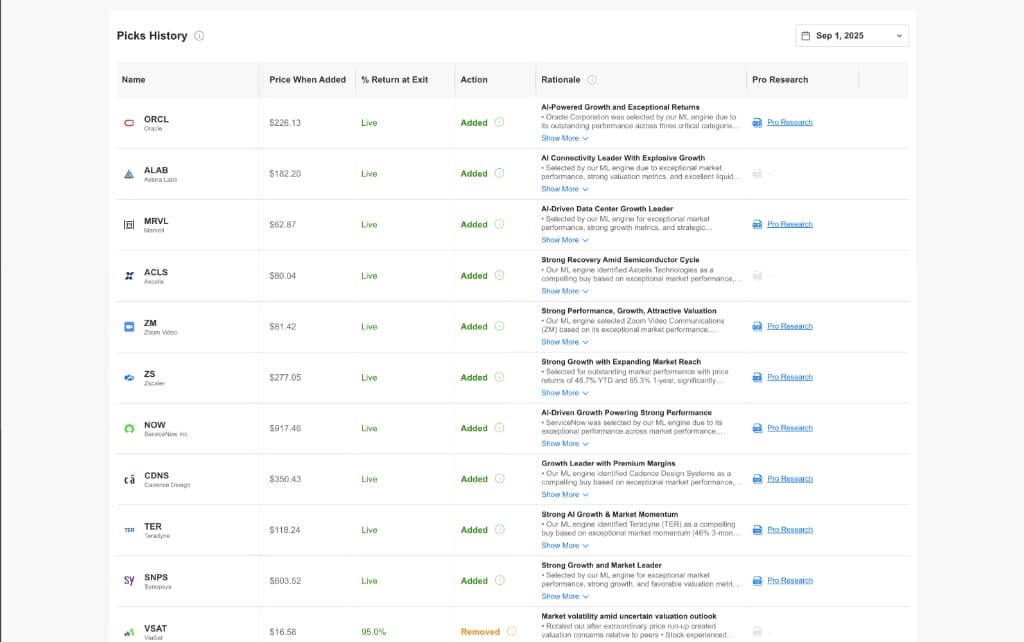
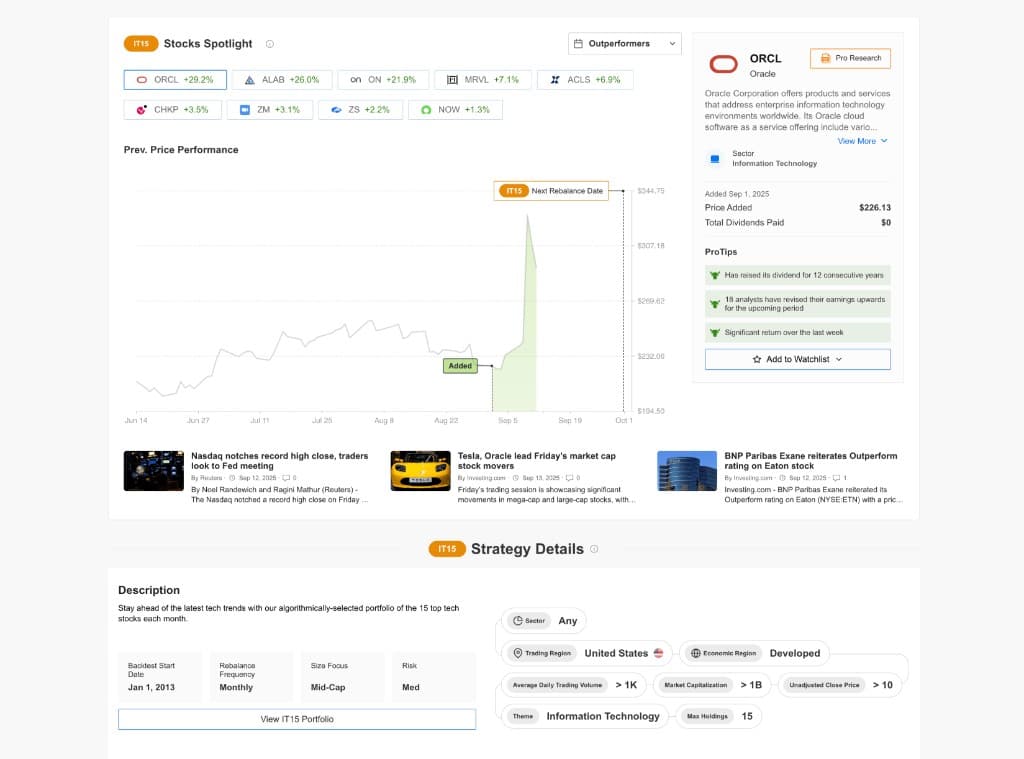
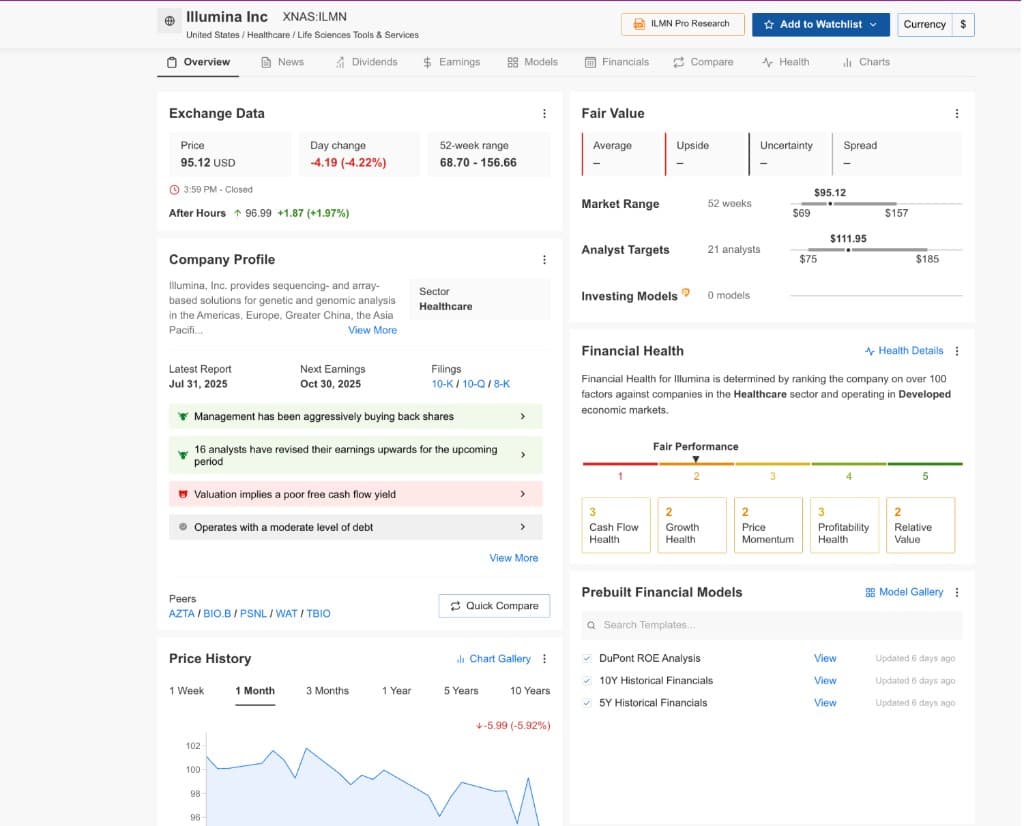
Picks History
Morningstar Review

✅ Pros
- Gold standard for fundamental stock research – trusted by institutional investors worldwide
- Economic moat ratings unique and genuinely useful
- Fair value estimates based on rigorous DCF methodology
- Star ratings provide quick quality assessment
- Strong, time-tested analytical methodology
- $249/year – competitive for the depth of research
⚠️ Cons
- Slow-moving, academic tone – can feel passive and disconnected from real-time markets
- No predictive market signals or regime intelligence
- No portfolio-level analysis
- No daily market overview or tactical guidance
- Better suited for patient value investors than someone managing actively
- Interface can feel dated compared to newer platforms
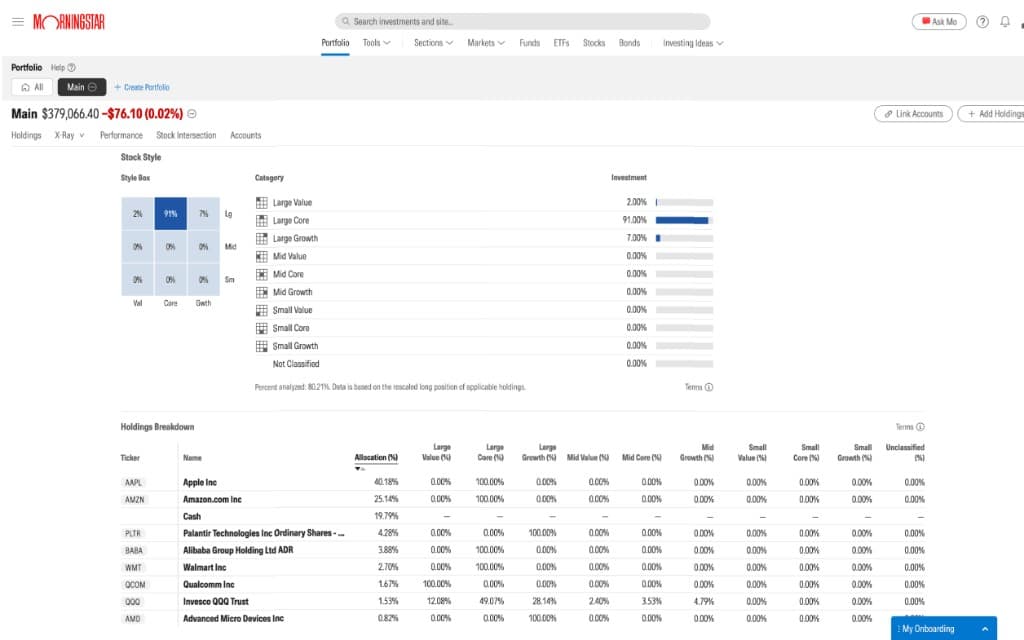
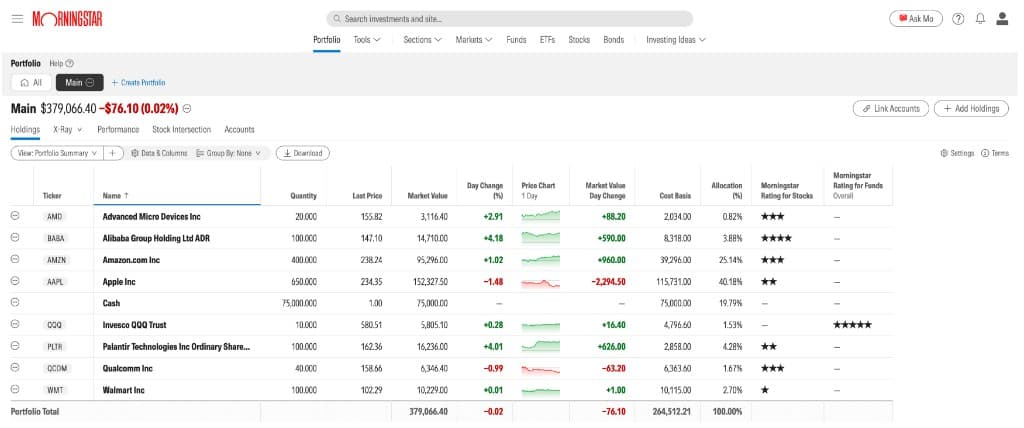
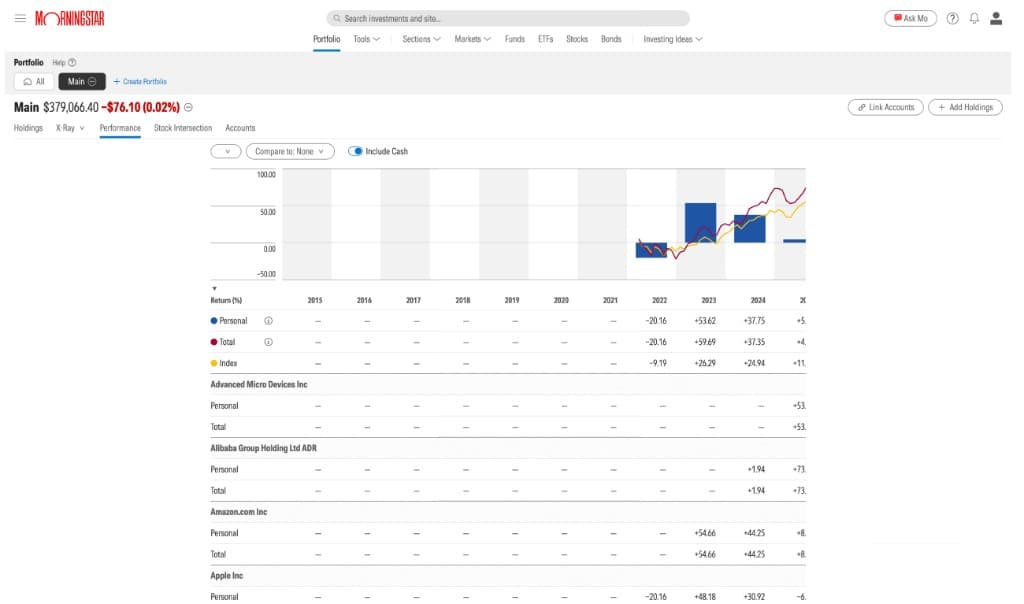
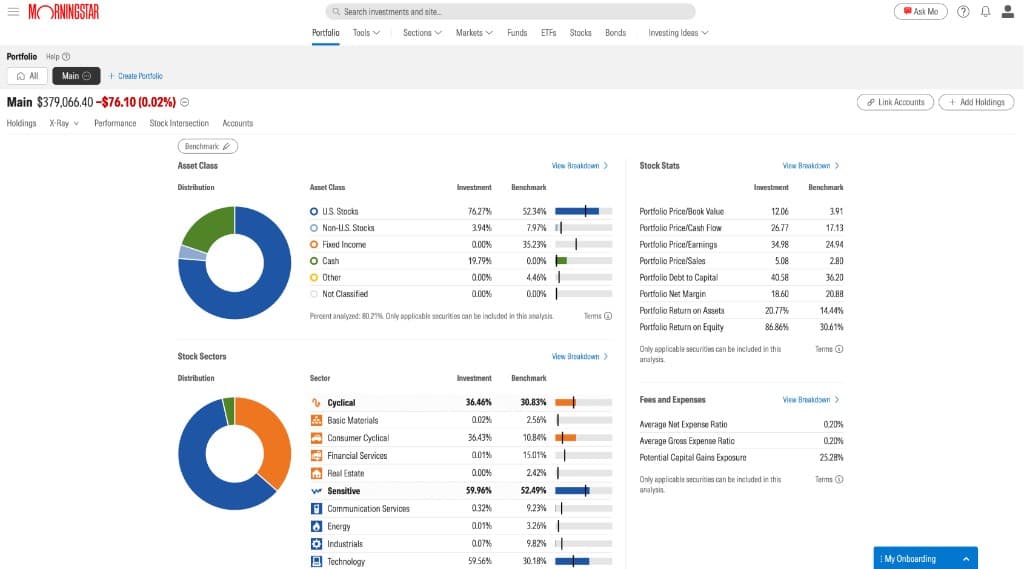
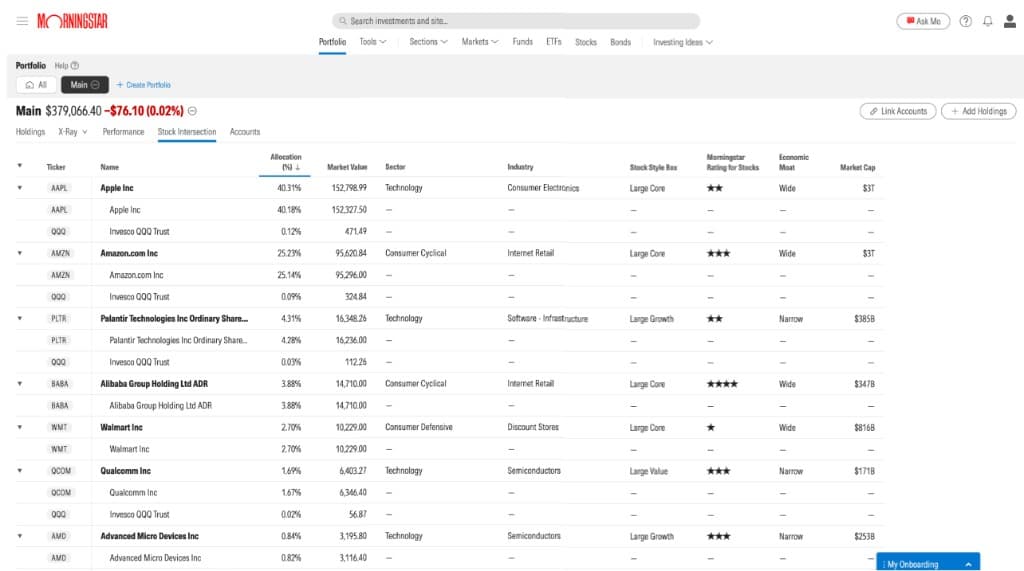
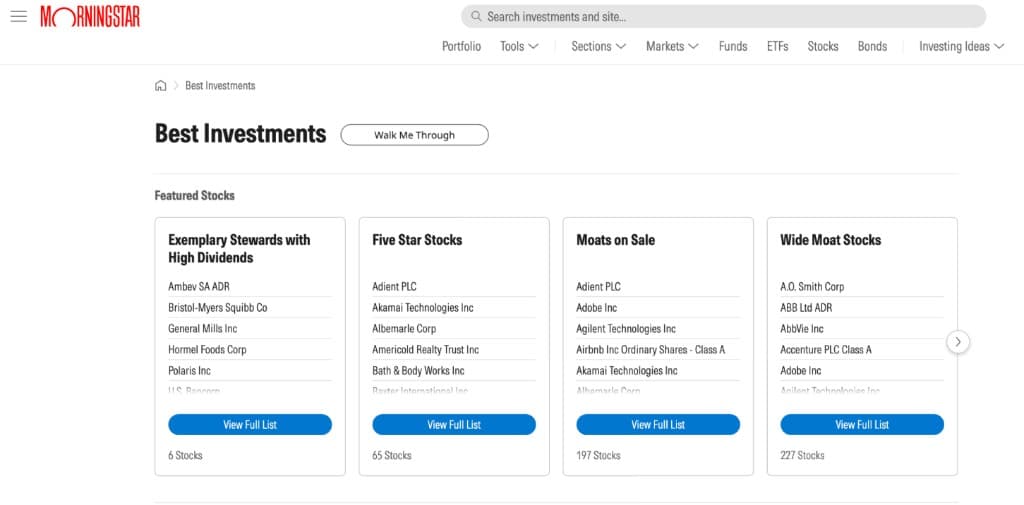
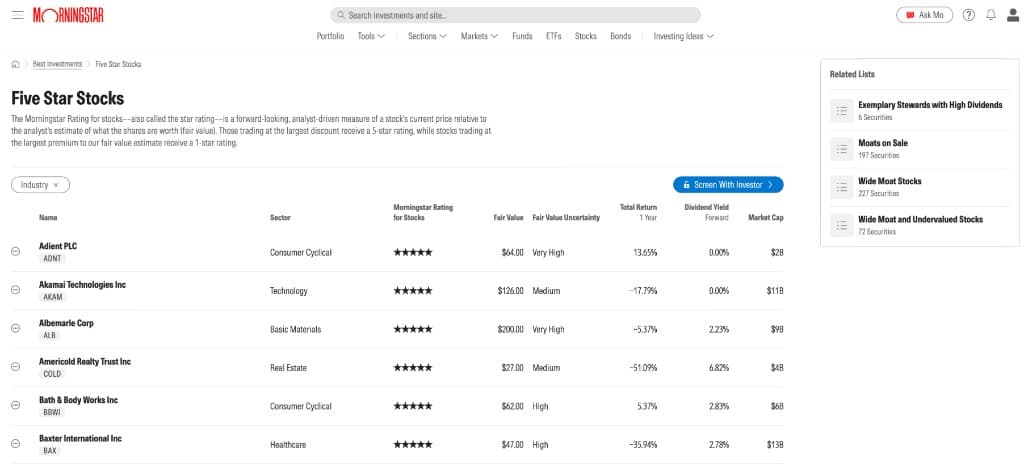
Morningstar is the gold standard for fundamental stock research, and that reputation is earned. Their economic moat framework – identifying companies with wide, narrow, or no competitive advantages – is unique in the industry and genuinely useful for long-term investors.
I respect Morningstar and I used it for years. But at this stage, I outgrew it. Morningstar tells you what a stock is worth. It doesn't tell you what your portfolio needs. There are no predictive market signals, no daily overview of what matters right now, and no analysis of how your holdings work together. It's an encyclopedia in a world that needs a compass.
If you're a patient value investor with a 10+ year time horizon who wants to understand intrinsic worth before buying anything, Morningstar remains the reference. For someone at 46 managing $1M+ who needs both strategic positioning and tactical awareness, it's a good supplement – not a primary tool.
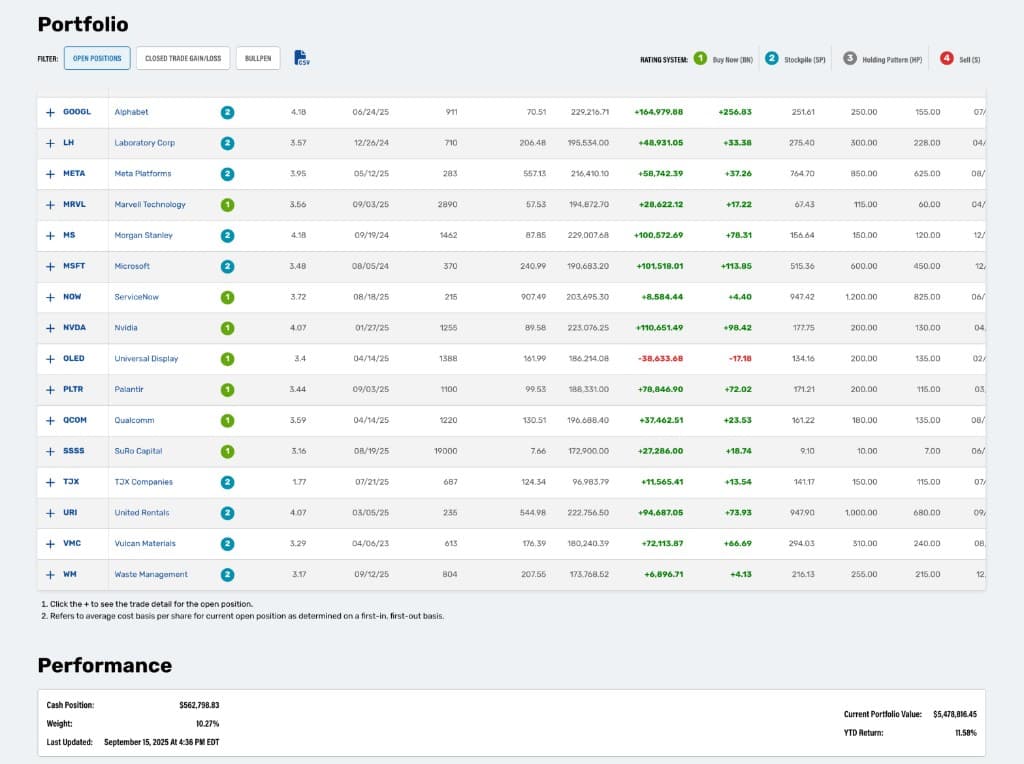
Portfolio – Holdings
Hedgeye Review

✅ Pros
- Best macro education available – GIP model is genuinely smart
- Keith McCullough is compelling, transparent, with real hedge fund experience
- 40+ bottom-up sector analysts – real analytical depth
- Daily Macro Show at 9am ET is informative and entertaining
- Risk Range model provides quantitative buy/sell levels
- Trustpilot 4.5
⚠️ Cons
- Overwhelmingly expensive: 20+ products at $30–$100/month each
- Only 36% of Investing Ideas long trades had a positive return (2020–2024)
- Sell signals essentially a coin flip: 53% of sold positions were higher 3 months later
- Stock already up 0.5–1% by the time you see the alert
- Built for active traders, not busy investors
- No portfolio-level analysis of your holdings
Hedgeye is the most intellectually stimulating platform on this list. I learned more about macro cycles, market regimes, and risk management from Keith McCullough's daily Macro Show than from any book I've read. The GIP model – tracking Growth, Inflation, and Policy to identify which quadrant the economy is in – is genuinely smart.
The problem is the gap between education and execution. Of 148 closed long-only trades in the Investing Ideas service (2020–2024), only 36% had a positive return. Only 32% beat the S&P 500 for their holding period. The sell signals were essentially random – 53% of positions were higher 3 months after being sold.
Then there's the cost structure. Hedgeye has 20+ separate products – each priced separately. To get anything close to a full picture, you're spending $2,000–$5,000+ per year. I spent $3,200 in one year across three products and my results were... fine. Not bad, not terrible. Definitely not worth $3,200.
MyWallSt Review

✅ Pros
- Prophet: momentum strategy claiming 21.6% avg annual returns, 16 years of real-time data
- Dead simple: 5 minutes a month – email/SMS tells you what to rebalance
- Transparent methodology: absolute + relative momentum, monthly rebalance
- Affordable entry: Invest at $99/year
- Strong historical pick record: 30+ picks that doubled
- Founder-led, accessible team
⚠️ Cons
- Tiny platform: very low traffic and brand recognition
- Prophet just launched – 16-year data is from internal testing, not live subscribers
- No portfolio analysis of your existing holdings
- No market intelligence beyond momentum
- Heavily tech-weighted historically
- No exit guidance between monthly rebalances
- Minimal community
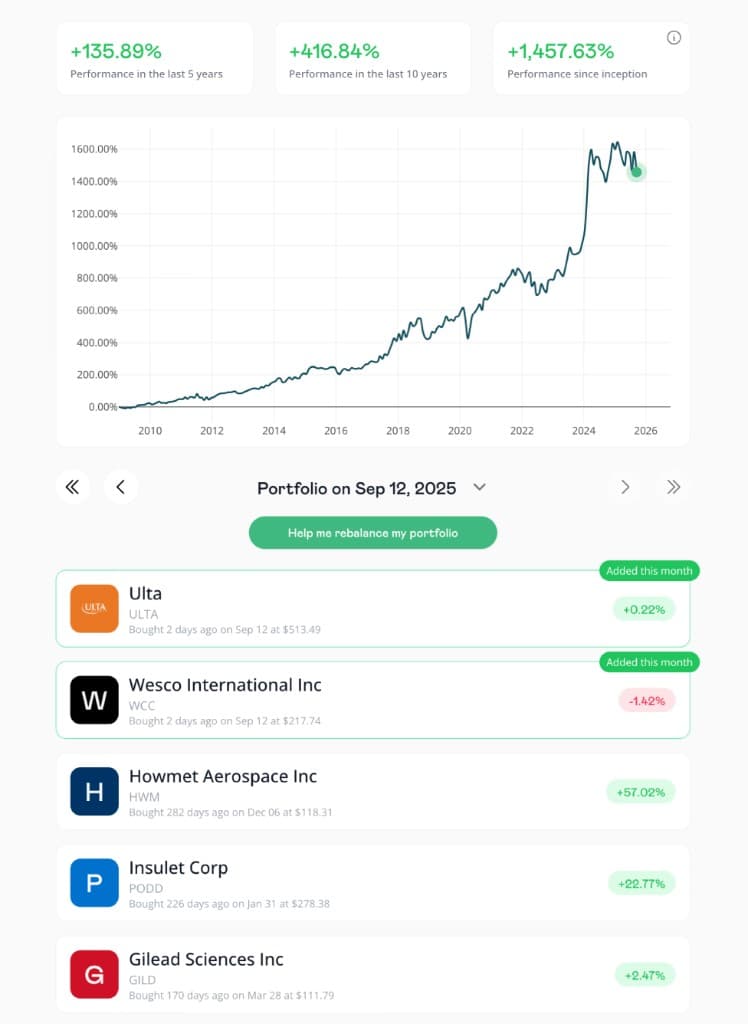
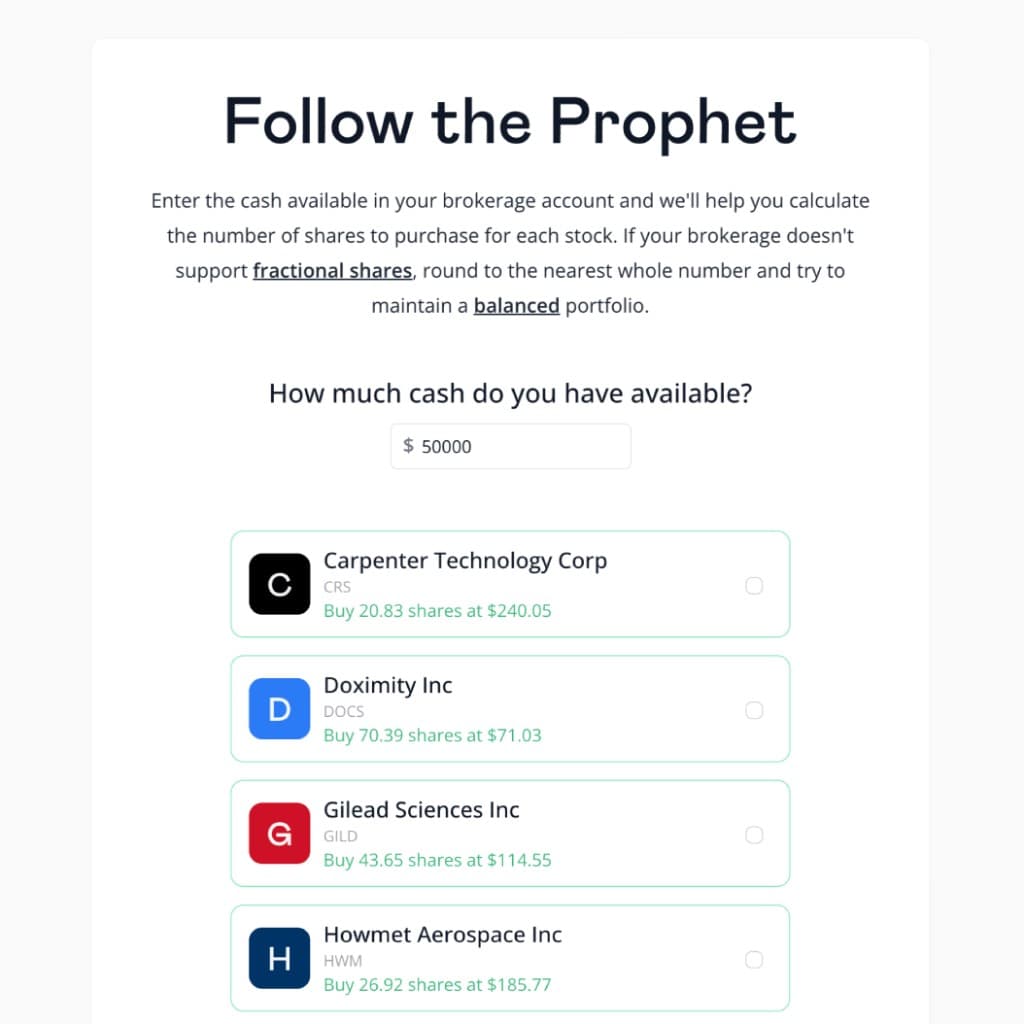
MyWallSt is a small Irish company founded by Emmet Savage that's quietly built something interesting with their Prophet product. It's a momentum-based portfolio strategy that combines absolute momentum with relative momentum to select the top performers, rebalancing monthly. They claim 21.6% average annual returns over 16 years of real-time testing – and they're explicit that this is not backtesting.
The promise is compelling for someone like me: 5 minutes a month. You get an email telling you what to rebalance. You execute it. You go back to your life. Their previous stock-picking model had legitimate wins – Shopify (+2,379%), Trade Desk (+915%), Amazon (+525%).
But Prophet as a consumer product literally just launched. The 16-year data comes from internal testing. It hasn't been stress-tested by thousands of real users making real trades with real money during a real bear market. It's the quiet kid in the room who might be onto something – but it's still a trust-me play.
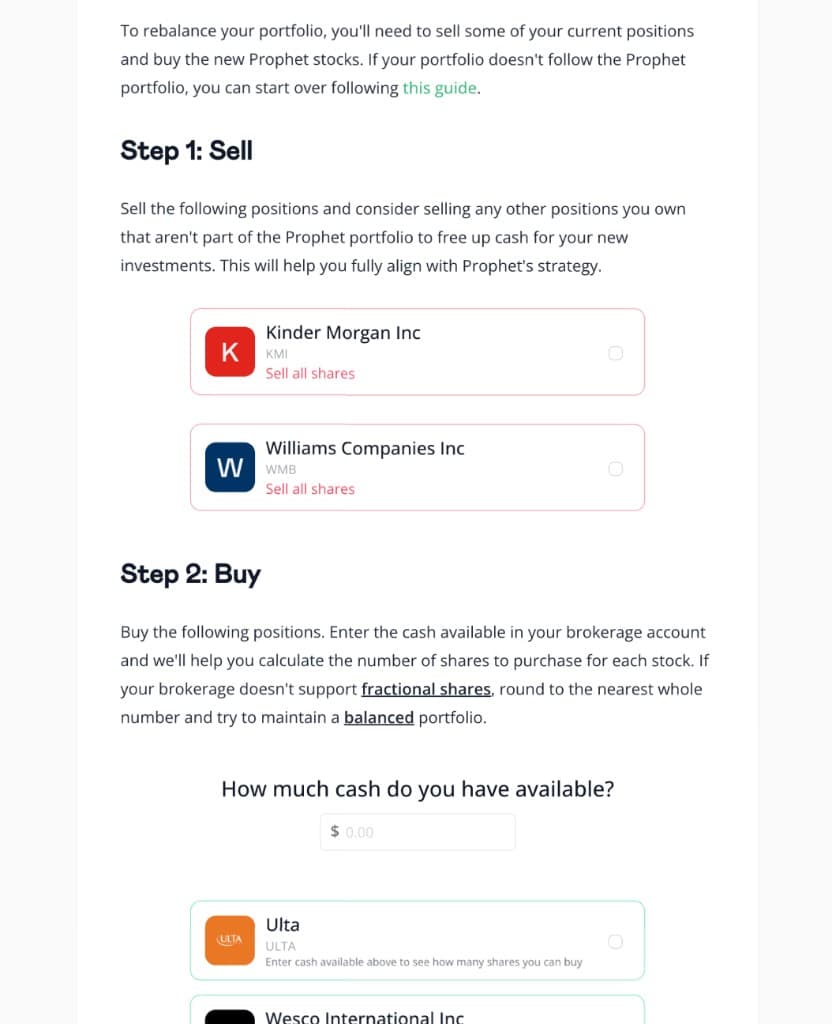
Prophet Portfolio Performance
TheStreet Review

✅ Pros
- Real-money Pro Portfolio (~30 holdings) managed by Chris Versace
- Strong team: 19 analysts including Helene Meisler, Stephen Guilfoyle, Rev Shark
- Good daily market commentary – multiple perspectives per day
- Live webinars and Q&A sessions
- Free trial month
⚠️ Cons
- Pro Portfolio underperforms S&P 500: 341% since inception vs S&P's 452%
- Expensive: $69.99/month or $599.99/year
- No research tools – commentary and a portfolio to follow, nothing for your own holdings
- High-maintenance: portfolio changes multiple times per week
- Must call a phone line to cancel – no online cancellation
- No predictive signals or portfolio-level analysis
TheStreet Pro gives you a real-money portfolio managed by Chris Versace (~30 holdings) plus daily market commentary from a team of 19 analysts. Some of the commentary is genuinely excellent – Helene Meisler's technical analysis and Stephen Guilfoyle's macro takes are worth reading even without a subscription.
But there's a number they can't hide. Their own portfolio comparison data shows the Pro Portfolio has returned 341% since inception. The S&P 500 has returned 452% over the same period. You'd have literally been better off buying a single index fund and never logging in again.
At $600–$984/year, the portfolio changes multiple times per week, there are no SMS alerts (only email), and cancellation requires calling a phone line. When your flagship product trails the benchmark and you make it hard to leave, the value proposition collapses.
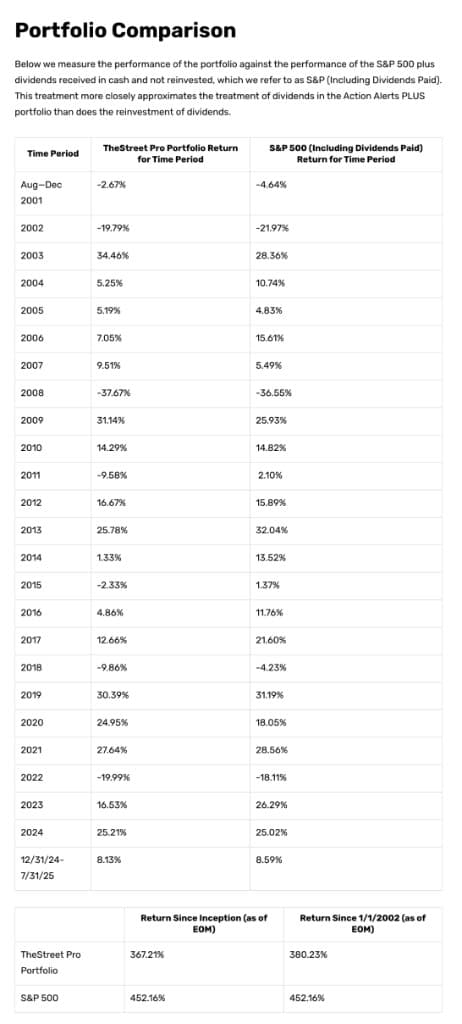
Portfolio Comparison vs S&P 500
Zacks Review

✅ Pros
- Long history – founded 1978 by MIT researcher Len Zacks
- Strong Buys historically average +23.68% annually (backtested since 1988)
- Good screener – filter by Value, Growth, Momentum, VGM composite scores
- Free tier lets you check any stock's Zacks Rank without paying
- 30-day free trial on all tiers
⚠️ Cons
- One-trick pony: entire system based on EPS revisions – standard feature everywhere in 2026
- Trustpilot 1.6 out of 5 – one of the lowest ratings for any paid financial service
- Performance claims are backtested hypotheticals
- Interface hasn't been meaningfully updated in over a decade
- No portfolio analysis whatsoever
- Tiered upselling: Premium $249 → Investor Collection $495 → Ultimate $2,995
Zacks Investment Research was genuinely revolutionary in 1978, when founder Len Zacks discovered that earnings estimate revisions are one of the most powerful forces behind stock price movements. Before the internet, before real-time data feeds, before every platform tracked EPS revisions simultaneously – that was a genuine edge.
It's 2026 now. Every modern investment platform includes EPS revision data as one feature among dozens. The entire Zacks system exists as a single checkbox filter on Seeking Alpha. You can check any stock's Zacks Rank for free on their own homepage without paying a cent.
The Trustpilot rating of 1.6 out of 5 tells you everything. Users report misleading marketing, aggressive auto-renewal practices, and a customer experience that doesn't match the product's self-image. At $249/year for Premium – with the 'good stuff' locked behind $495 and $2,995 tiers – you're paying for an approach that was cutting-edge when Jimmy Carter was president.
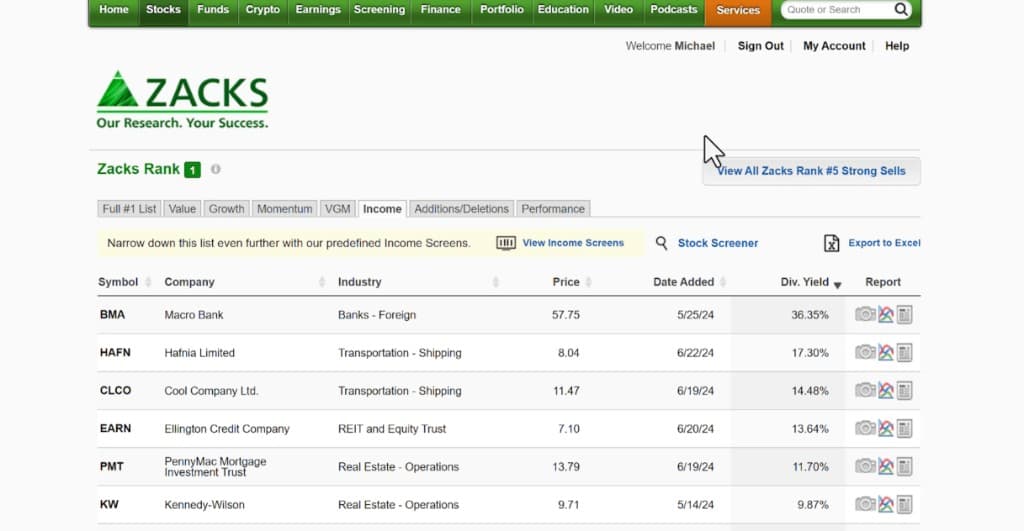
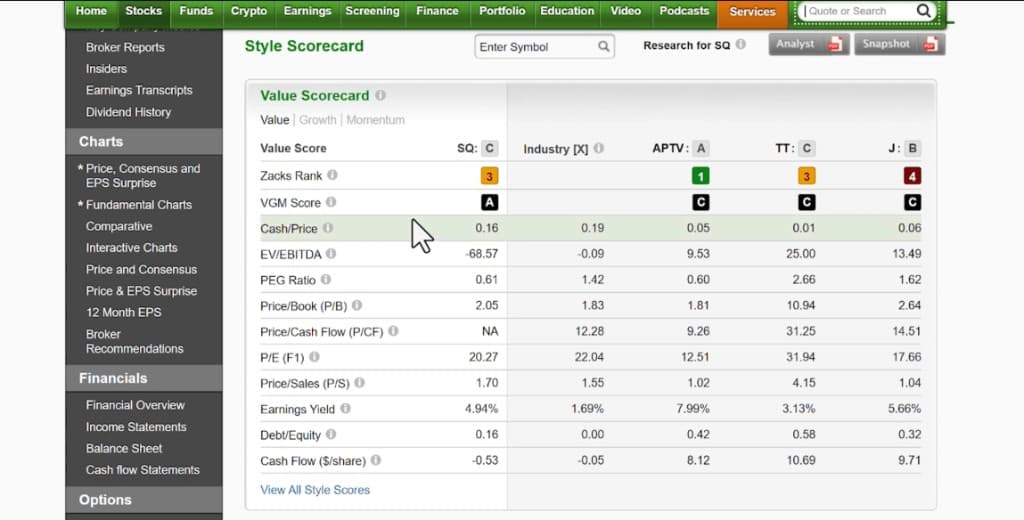
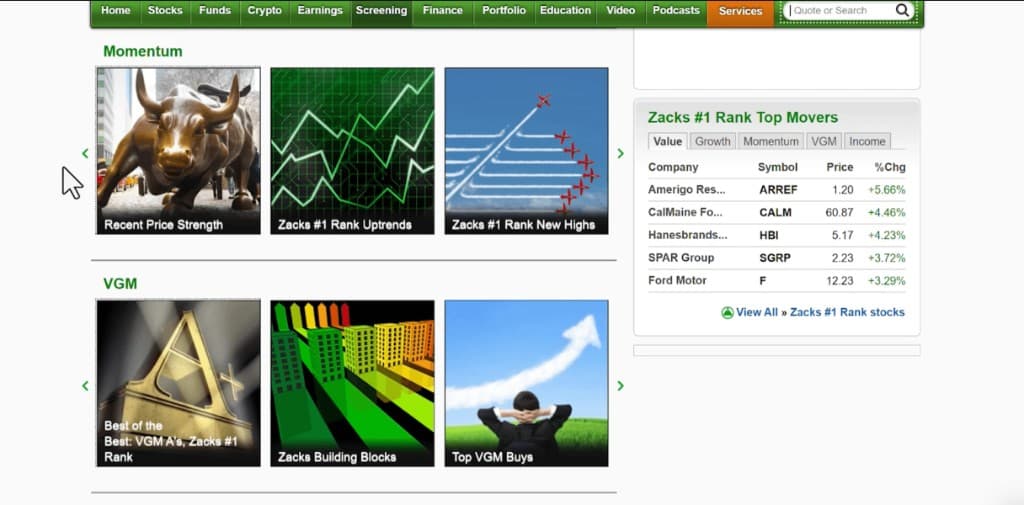
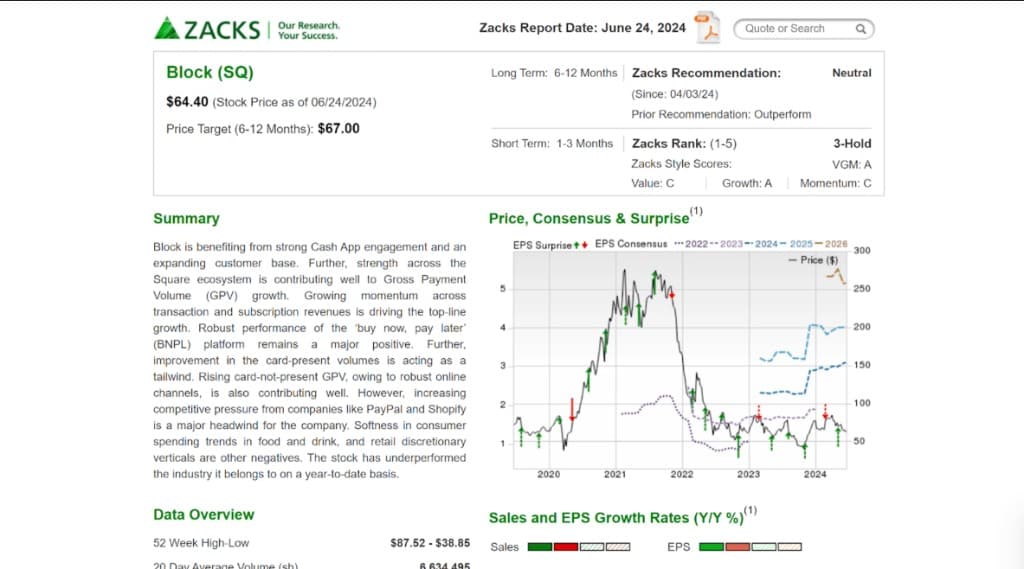
Zacks Rank #1 – Stock List
The Wrap
You've made it to the end – thanks for sticking with me through 12 tools and six years of subscription fees. The biggest lesson I took away from this entire process: most investment platforms are solving the wrong problem.
They all answer the same question from different angles: "Which stock should I buy?" Different packaging, same underlying assumption – that the path to better returns is finding the right individual stock.
But after managing my own portfolio for six years – and watching $40K evaporate during COVID because I didn't understand how my holdings were connected – I know that's the wrong question. The right question is: "Does my portfolio work?"
Exent.AI was the only tool I tested that really answered it. The Market Intel Adjusted S&P 500 strategy returned +1,491.1% vs the S&P's +143.1%, with nearly half the downside risk. And it was the first tool that made me feel like I had a co-pilot – not just another stack of stock tips.
If you're serious about making your portfolio work harder than you do, Exent is the tool worth paying for. When you have $1M at stake and 12 years until retirement, uncertainty isn't just uncomfortable – it's expensive.